September birth flower tattoo ideas and meaning
The morning glory is one of the most forgiving small florals in tattooing, and the aster needs its ray count cut back before it will hold at any size.
- Garden asters are mostly Symphyotrichum species. Morning glory is the genus Ipomoea.
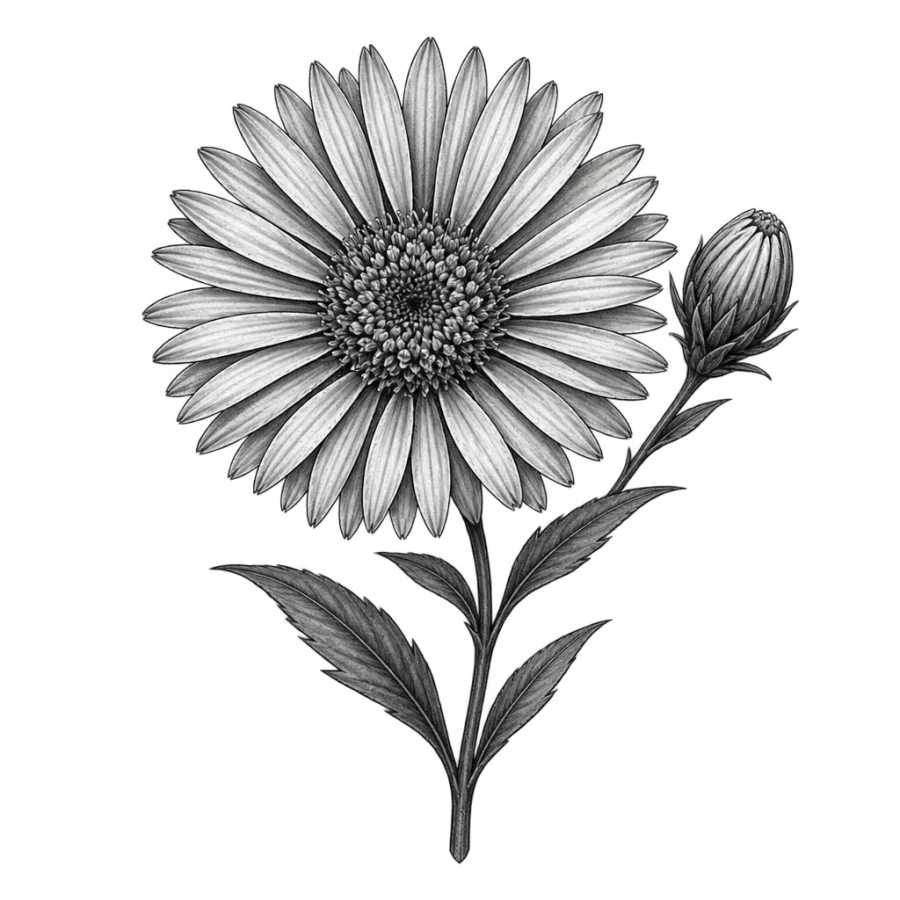
- An aster head has a yellow central disc ringed by 15 to 40 narrow ray florets.
- Aster stems branch, so one plant carries many heads and narrow lance shaped leaves.
- A morning glory has five petals fused into one flared trumpet with five faint seams.
- The throat of a morning glory shows a pale five pointed star where the seams meet.
- Morning glory buds spiral tightly, and the flowers open at dawn and close by afternoon.
- The two flowersAster and morning glory
- Smallest that works4 cm trumpet, 4 cm aster
- Usual placementsWrist, ankle, forearm, hip
- Studio cost$110 to $420
September pairs a trumpet and a starburst. The morning glory is a single flared funnel with five faint seams running out from the throat, carried on a twining vine with heart shaped leaves. It is built from one clean shape, which is why it survives at 4 cm and why artists like it for wrist and ankle bands.
The aster is a composite flower like the daisy, with a yellow disc ringed by narrow strap like rays in purple, blue, pink or white. Asters carry 15 to 40 rays in one or two rings, and drawing all of them is the mistake that turns the flower into a grey halo after a decade. Sixteen to twenty rays is the count that lasts.
Aster and morning glory, described properly
An aster is a head rather than a single flower. The center is a flat disc of tiny yellow florets, and around it sit one or two rings of ray florets, each one a narrow strap with a blunt or slightly notched tip. The rays are typically purple, blue, pink or white, and they radiate almost flat. Stems branch freely and carry many heads at once, with narrow lance shaped leaves along them.
A morning glory is one funnel. Five petals are fused into a continuous flared trumpet, so the rim is a smooth circle broken only by five shallow points where the seams reach the edge. Those seams run back down to the throat, where they meet in a pale five pointed star. The stem twines, always in the same direction, and the leaves are heart shaped with a deep notch at the base.
Details that keep each one recognizable
- The five seams radiating from the morning glory throat, drawn as light lines only.
- A visible yellow disc at the aster's center rather than a solid dot.
- Aster rays kept narrow and strap like, not teardrop shaped like a daisy's.
- The twining vine and heart shaped leaves, which identify morning glory at any size.
- Tightly spiralled buds along the vine, which read well even at 5 mm.
Petal counts and what survives
Cut the aster's rays. A real head with 35 narrow rays drawn at 4 cm leaves gaps under half a millimeter, and those close within five to eight years, at which point the flower reads as a shaded circle. Sixteen to twenty rays, varied slightly in length, keeps the starburst open for decades. Leave the disc as a stipple or a ring of small dots instead of solid black, because solid centers spread outward fastest.
The morning glory needs almost no compromise. Four centimeters across the trumpet works, and the flower still reads at 3 cm if the artist drops the interior seams and keeps only the rim and the throat. The vine is the part to watch: a twining stem drawn thinner than the flower outline will fade first, so ask for the same needle weight throughout.
Styles that suit September
Morning glory has a long history in Japanese work, where it is drawn with a heavy outline and flat color and appears in summer panels alongside dragonflies. That treatment ages better than anything else and works from 8 cm up. Fine line morning glory vines are the most requested version now, usually as a band around a wrist or an ankle. Asters suit dotwork, where a stippled disc and clean rays give the flower depth without heavy fill.
Combinations that work
- Morning glory vine as a wrist or ankle band, fine line, flowers at 3 to 4 cm
- Single morning glory in Japanese style with bold outline, 8 to 12 cm
- Aster with sixteen rays and a stippled disc, 4 to 6 cm, inner forearm
- Spray of three asters on branching stems, black and grey, 10 to 14 cm
- Morning glory vine twining through a row of other birth flowers
Fitting September into a family piece
September is an easy month to place because both flowers are small and flat. An aster sits comfortably next to a daisy or a violet without a scale problem, and the morning glory vine can be used as the connective tissue of the whole design, running behind the other months and tying separate stems into one shape.
One warning about drawing both September flowers. Most months look better with a single flower chosen rather than both included, and September is where that matters most, because an aster head and a morning glory trumpet sitting side by side compete for the same attention. In a set of four or five children, give each month one flower. Save the pairs for a standalone piece about your own month.
15 September birth flower tattoo designs, with the prompt behind each one
Every design below came out of AI Tattoo Lab. Tap one to load its prompt into the generator, then change a word and make it yours.
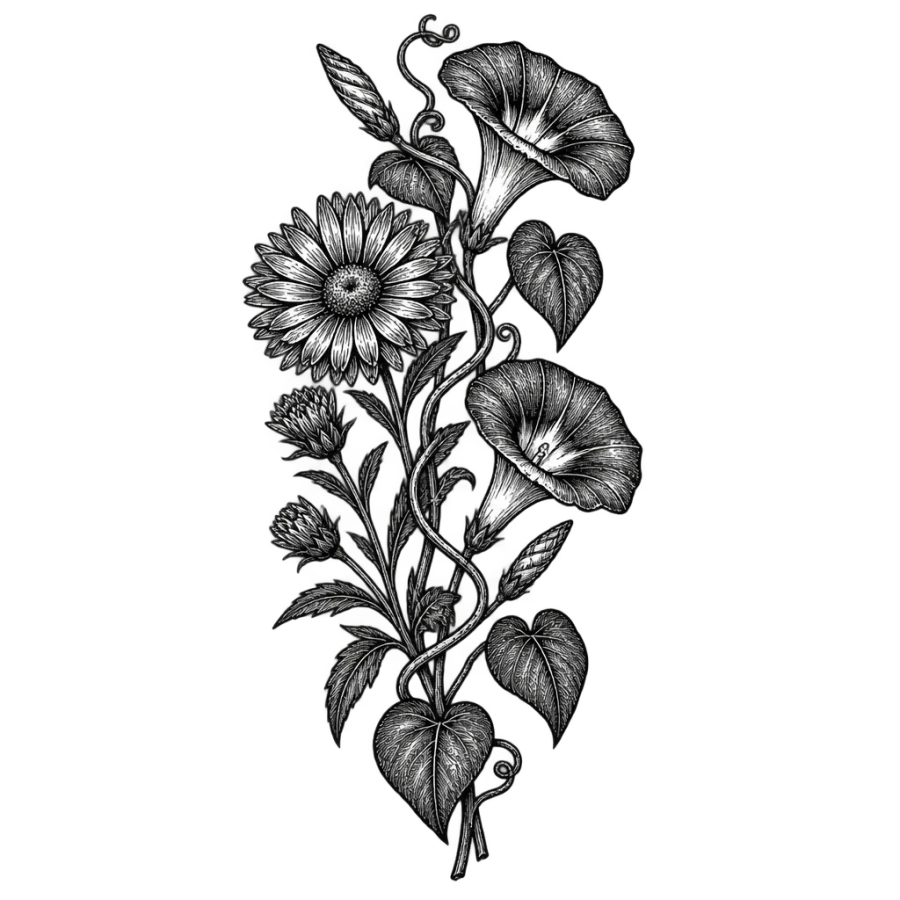
An aster with a morning glory vine twining up it, engraving
Use this prompt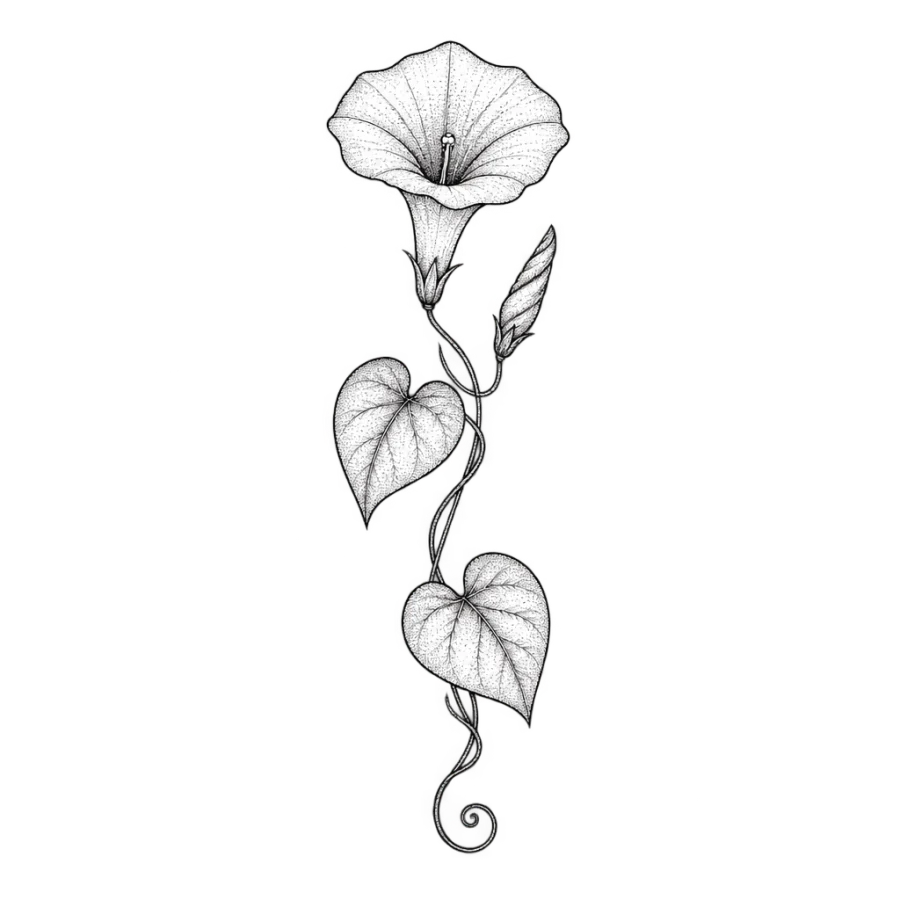
A morning glory trumpet on a twining vine, fine line no shading
Use this prompt
A morning glory in solid black with a star throat cut out
Use this prompt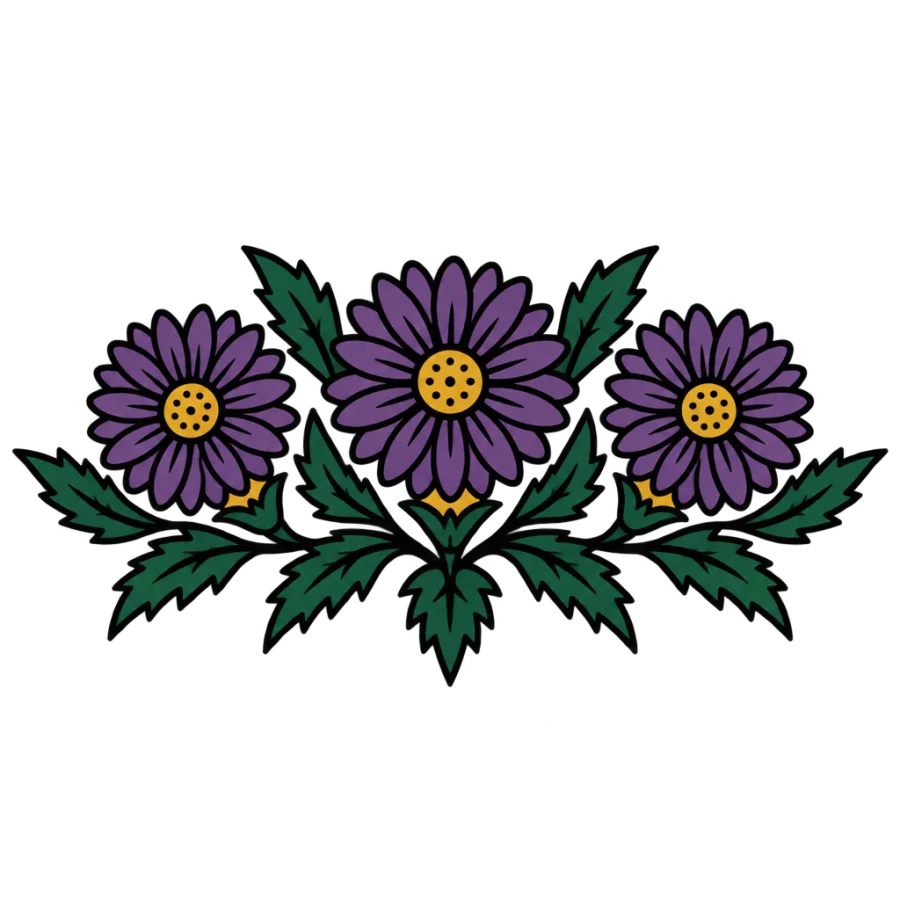
A spray of three asters with toothed leaves, old school color
Use this prompt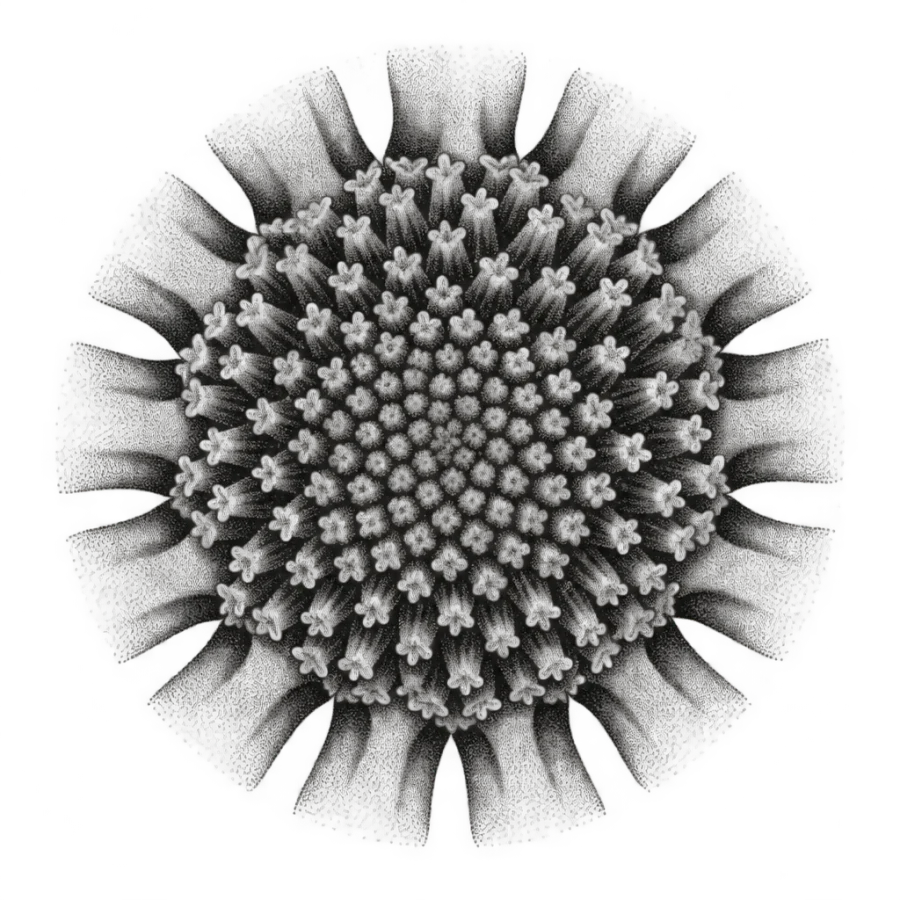
A close crop of an aster centre packed with florets, dotwork
Use this prompt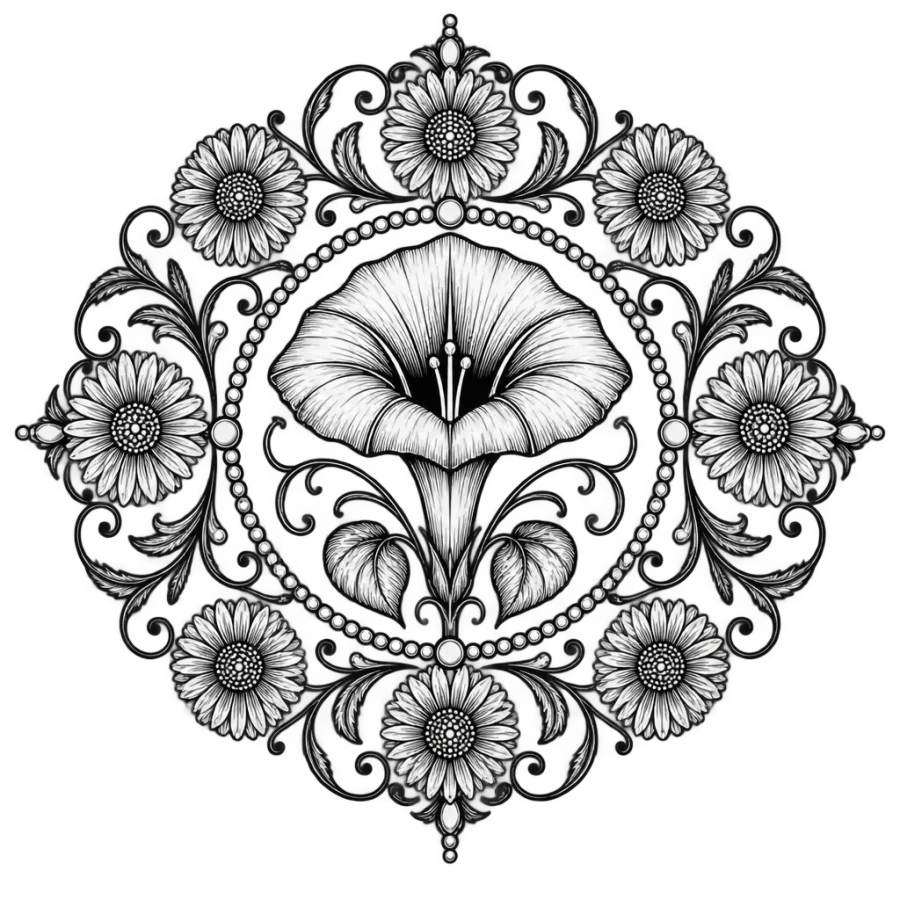
A morning glory inside a lace ring of aster heads
Use this prompt
An aster as concentric rings of petals inside a square frame
Use this prompt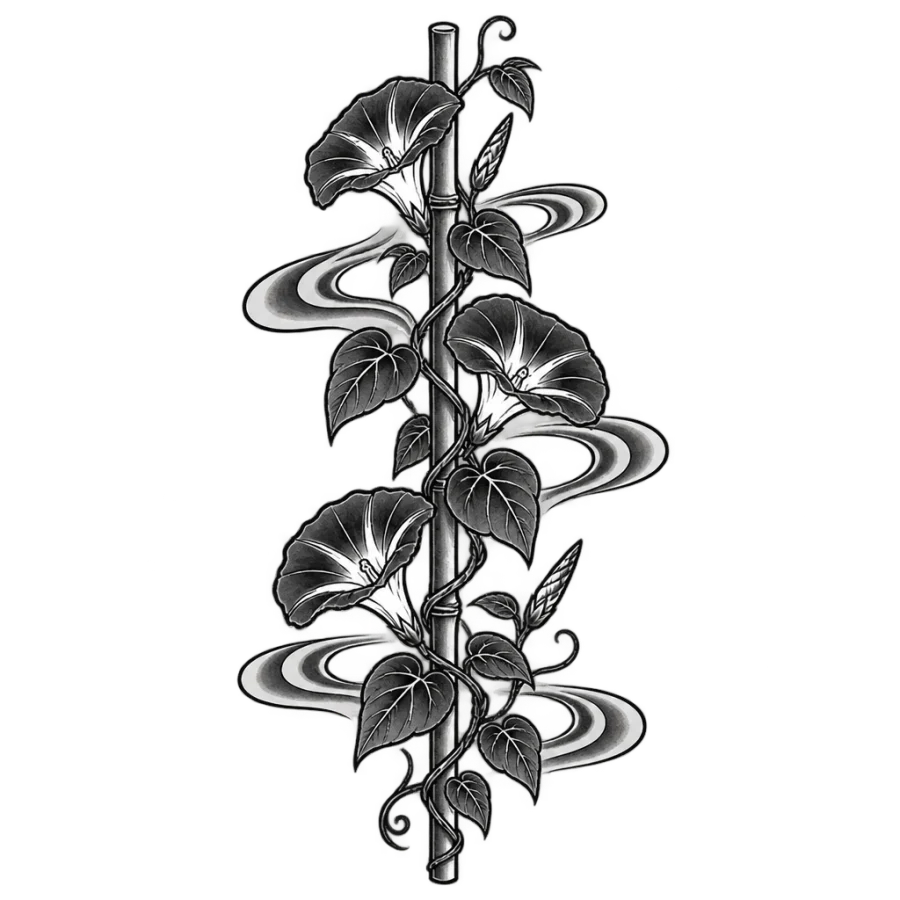
A morning glory vine climbing a bamboo stake, Japanese style
Use this prompt
A morning glory and leaf drawn without lifting the pen
Use this prompt
A bunch of asters in an arch with a dragonfly above
Use this prompt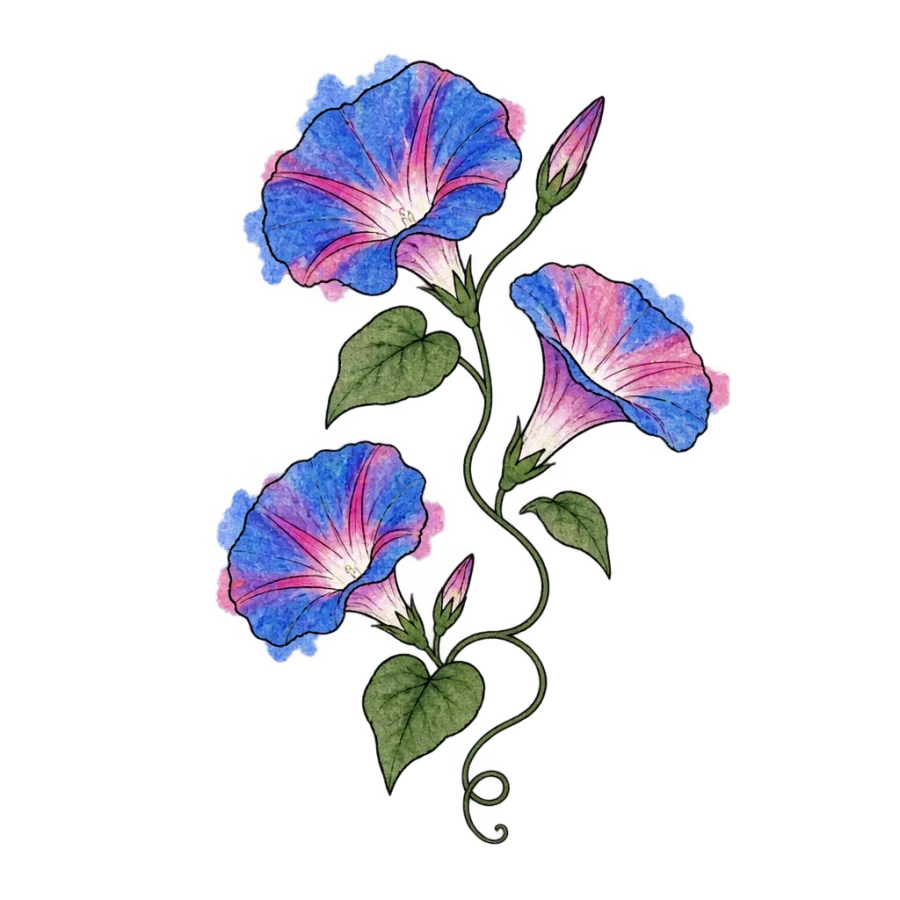
Three morning glory blooms drifting apart in soft watercolor
Use this prompt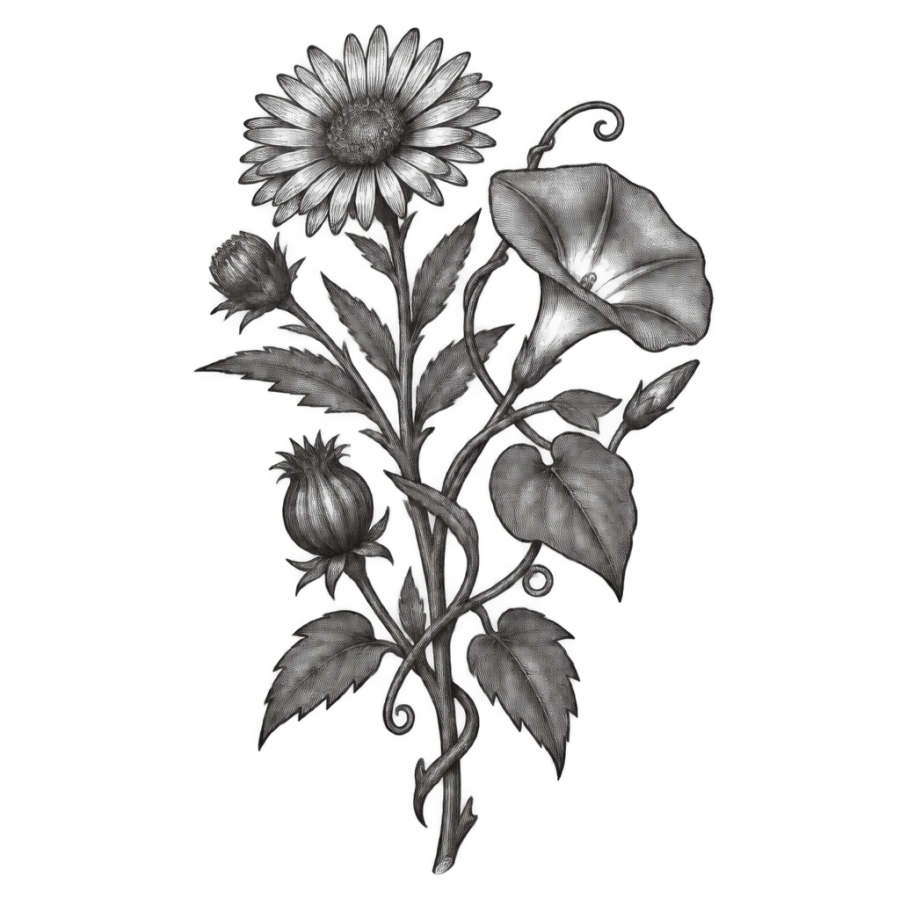
Aster stem crossed with a morning glory vine, engraved botanical plate
Use this prompt
Two mirrored morning glory trumpets around a central aster, symmetrical
Use this prompt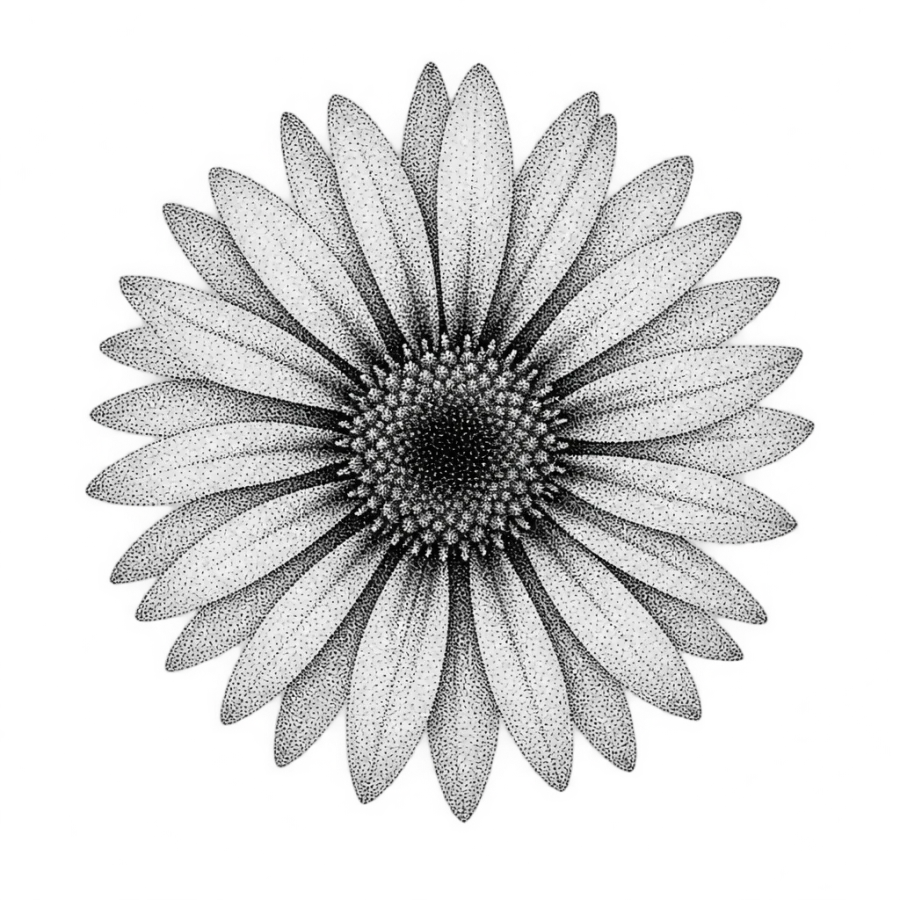
Single aster seen from above, built from stippled dots with no outlines
Use this promptDescribe an idea of your own and get four designs back in about 20 seconds.
Open the generator
Questions people ask
How many rays should an aster tattoo have?
Sixteen to twenty is the durable range. Real asters carry 15 to 40 narrow ray florets, and drawing the higher counts at tattoo scale leaves gaps too thin to stay open. Varying the ray lengths slightly stops the flower looking like a mechanical sunburst and keeps it reading as a plant.
Is a morning glory a good small tattoo?
One of the best. The trumpet is a single continuous shape with a wide open interior, so it holds at 3 to 4 cm and ages well. Keep the interior seams light or drop them entirely at the smallest sizes, and make sure the vine is drawn at the same line weight as the flower.
What do the September flowers mean?
The aster is read as patience and remembrance, and it was planted on graves in parts of Europe. The morning glory carries affection and, because each bloom lasts one morning, it has been used for a life that was short. Both readings come from nineteenth century flower language rather than anything older.
Can a morning glory vine wrap the wrist or ankle?
Yes, and it is one of the better band subjects because the vine already twines. Plan for the flowers at 3 to 4 cm with buds and leaves between them. The inner wrist and the ankle bone are the parts most likely to need a touch up, so ask the artist to keep the line simple over both.
Should I get both September flowers in one design?
For a standalone piece about your own birth month, both work well together at 12 to 16 cm, with the vine looping around the aster stems. In a family set with several months, pick one. Two flowers per month across four children turns into eight flowers and the piece stops being readable.