July birth flower tattoo ideas and meaning
Larkspur is a tall spike of spurred flowers that suits a spine or a forearm, and the water lily is a wide open bloom that needs real size to work.
- Larkspur covers Consolida and Delphinium species. Water lily is the genus Nymphaea.
- A larkspur flower has five petal like sepals, the top one drawn back into a long spur.
- Small inner petals sit at the center of a larkspur flower, together called the bee.
- Larkspur leaves are finely divided into narrow, almost thread like segments.
- A water lily has 20 to 30 petals in overlapping ranks around a crowd of yellow stamens.
- Water lily pads are round with a V shaped notch cut to the center.
- The two flowersLarkspur and water lily
- Smallest that works6 mm florets, 8 cm lily
- Usual placementsSpine, forearm, calf, back
- Studio cost$150 to $600
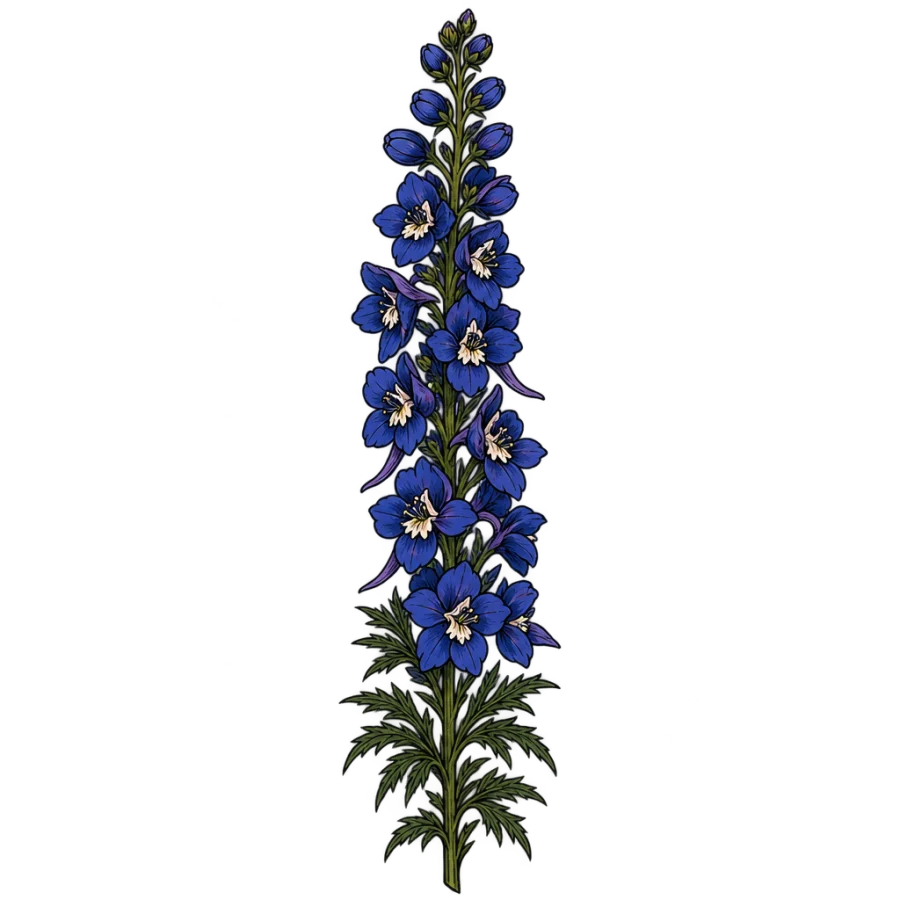
July's pair are both about shape rather than detail. Larkspur grows as a vertical spike with flowers all the way up the stem, each one carrying a long spur at the back that gives the plant its name. That vertical form is why it keeps turning up on spines, forearms and the outside of the calf, where the body already offers a long narrow space.
The water lily is the opposite: a wide bowl of overlapping petals sitting flat on water, with round notched leaves floating around it. It is a generous subject for a big piece and a poor one for a small tattoo, because its character is in the number of petal ranks and those ranks need room. Below 8 cm it reads as a generic many petalled flower.
Larkspur and water lily, described properly
Larkspur flowers sit along an upright spike, opening from the bottom up. Each flower has five petal like sepals spread in a loose face, and the uppermost one extends backward into a long hollow spur, usually 1 to 2 cm. In the center, two to four small true petals cluster into a shape gardeners call the bee. The leaves are cut into narrow thread like segments, which gives the whole plant a feathery outline.
A water lily has 20 to 30 petals arranged in overlapping ranks, broad at the base and tapering to a rounded point, spiralling out from a dense crowd of yellow stamens. The flower sits on a long stalk that runs down to a rhizome in the mud, and it either floats or holds a few centimeters above the surface. The pads are round, leathery, and cut by a V shaped notch running to the center.
The parts that identify each plant
- The spur at the back of each larkspur flower. Without it the spike reads as generic.
- The feathery thread like leaves, which separate larkspur from lupin or foxglove.
- The notched round pad, which is what tells a viewer a water lily is a water lily.
- The visible ring of yellow stamens at the center of the lily.
- Flowers opening from the bottom of the larkspur spike upward, with buds at the top.
Sizes: what the spike and the bowl each need
On a larkspur spike, the individual flowers have to stay above about 6 mm across. Below that the spurs and the faces merge and the spike turns into a fuzzy stripe with a feathered edge. A stem carrying eight to twelve flowers at 8 mm each, with gaps, lands at 12 to 18 cm. That fits an inner forearm, a spine, or the outside of a calf comfortably.
The water lily needs 8 cm minimum and looks better at 12 to 20 cm. The problem at small sizes is the petal ranks: three or four overlapping layers need visible skin between them, and at 6 cm you have less than a millimeter per gap. Artists usually cut the petal count to twelve or fourteen drawn edges and leave the outer rank open rather than closing every shape.
Styles that suit each one
Larkspur suits fine line and dotwork, where the feathery leaves can be suggested with short strokes and the spurs stay crisp. It also works in a botanical illustration treatment with the stem drawn full height and a couple of loose buds at the top. The water lily has a long history in Japanese and neo traditional work, where it sits alongside koi and water linework, and that is the treatment that ages best because the outlines are heavy and the shapes are simple.
What people usually ask for
- Larkspur spike down the spine, fine line, 18 to 25 cm
- Two crossed larkspur stems with feathery foliage, 12 to 15 cm, forearm
- Water lily with two pads and water lines, neo traditional, 15 to 20 cm, thigh
- Water lily in black and grey with stippled shading, 12 cm, shoulder
- Larkspur with a name or date running alongside the stem
Grouping July with other months
A larkspur spike is the tallest flower on most birth month lists, which makes it a useful spine or centerline for a family piece. Several artists build the group around it: the larkspur runs vertically and the other months branch off it as short side stems. That gives the set a structure instead of a row, and it extends easily if another child arrives.
The water lily is harder to combine. Its horizontal bowl shape and the pads around it take up a lot of width, so it tends to sit alone as the anchor of a larger back or thigh piece with the other months tucked around the edges. If a set has to stay under 15 cm, most people use the larkspur for July and leave the lily for a standalone tattoo later.
12 July birth flower tattoo designs, with the prompt behind each one
Every design below came out of AI Tattoo Lab. Tap one to load its prompt into the generator, then change a word and make it yours.
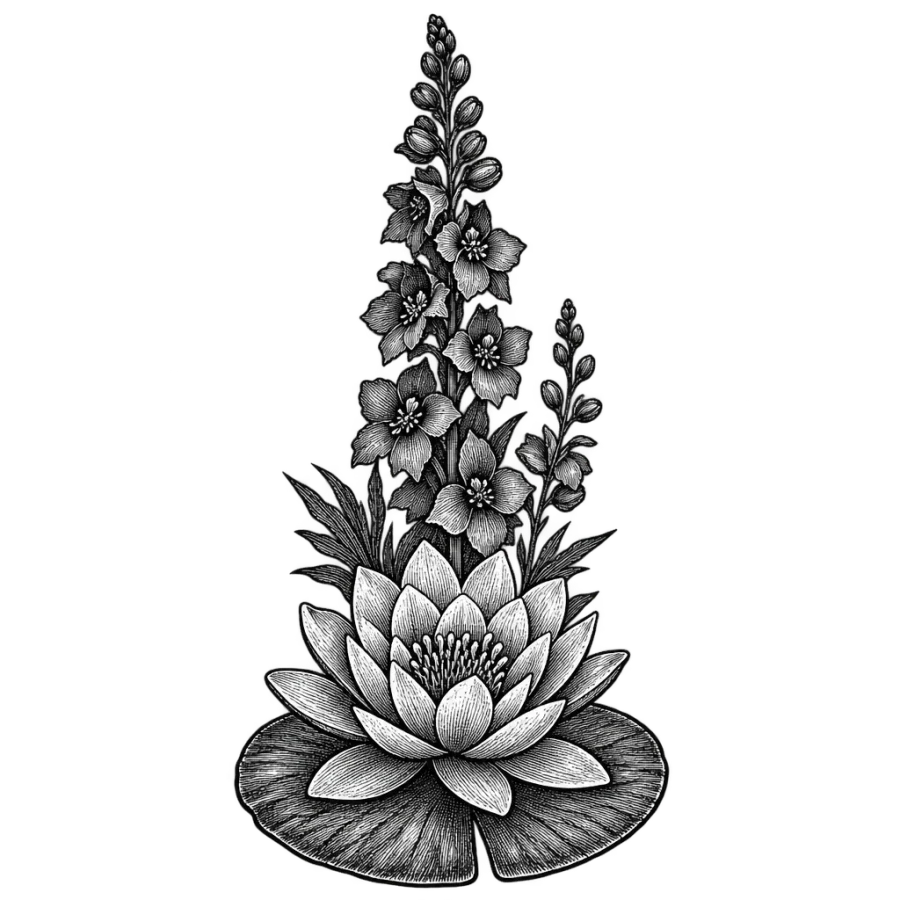
A larkspur spike behind an open water lily on a pad, engraving
Use this prompt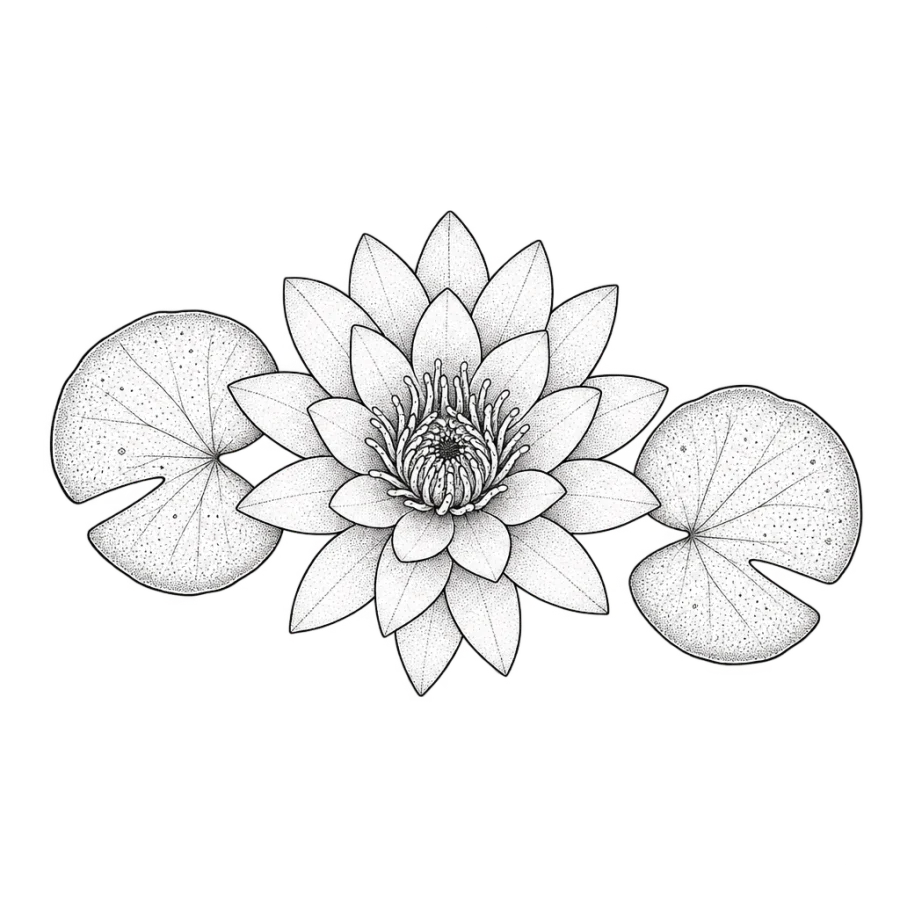
A water lily seen from above with two lily pads, fine line
Use this prompt
A water lily in solid black with veins in negative space
Use this prompt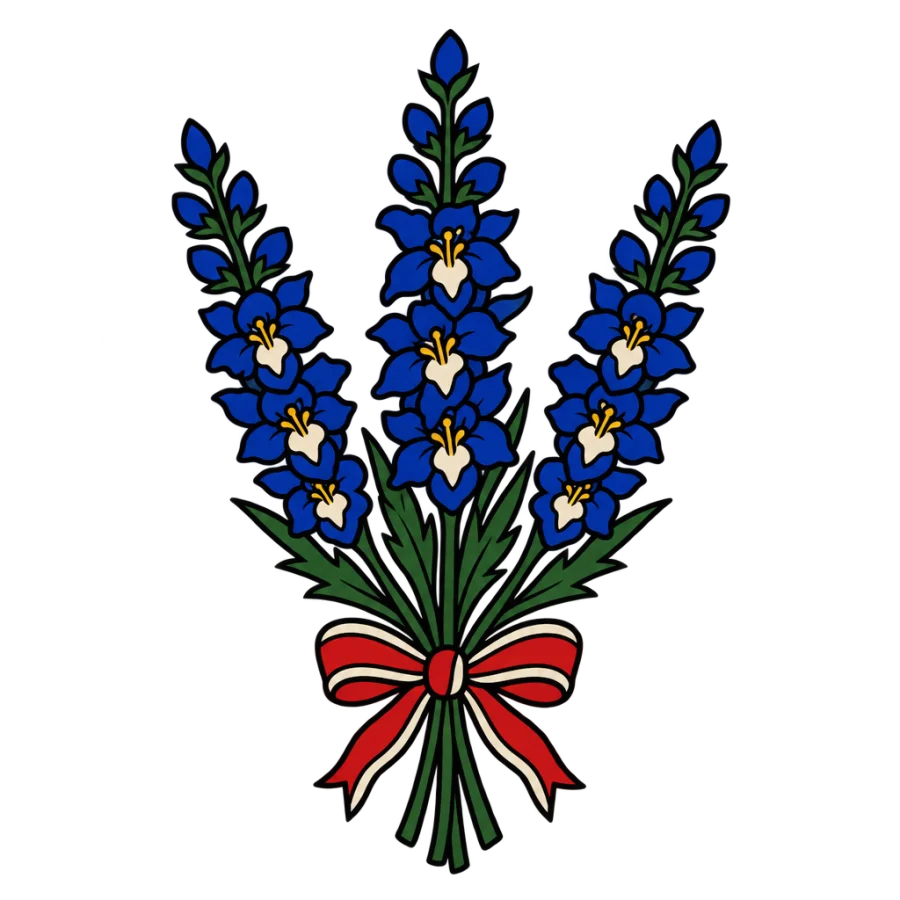
Three larkspur stems tied with a ribbon, bold old school color
Use this prompt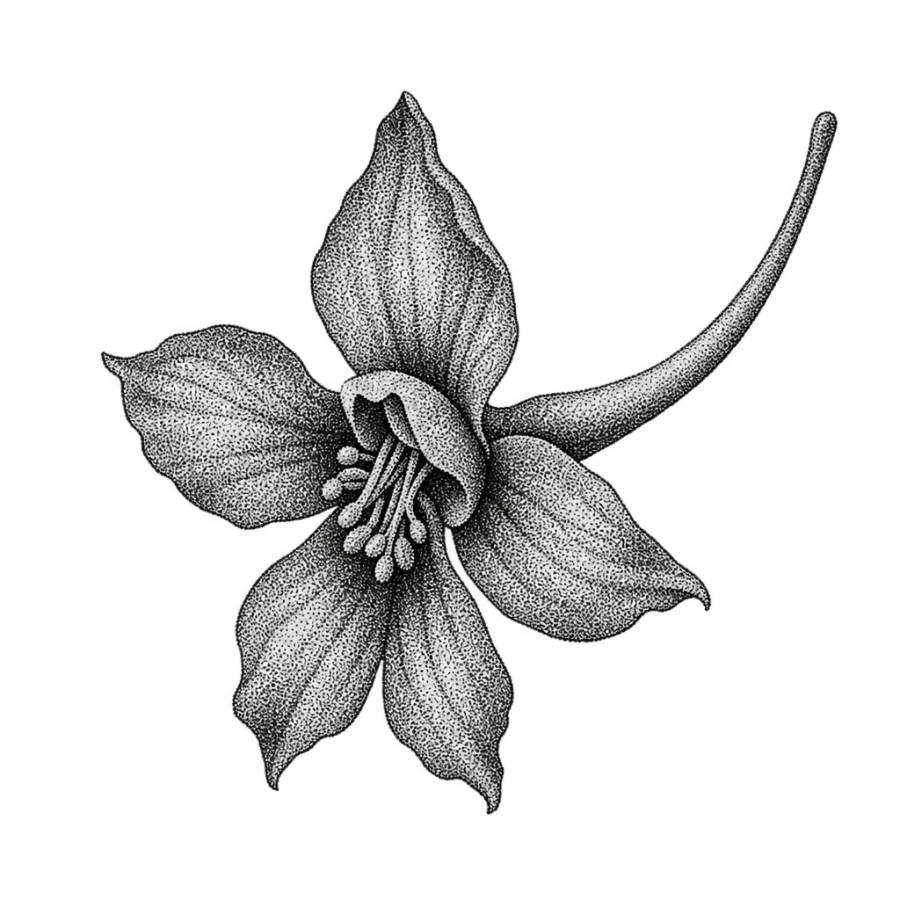
One larkspur floret up close with its long spur, stippled dotwork
Use this prompt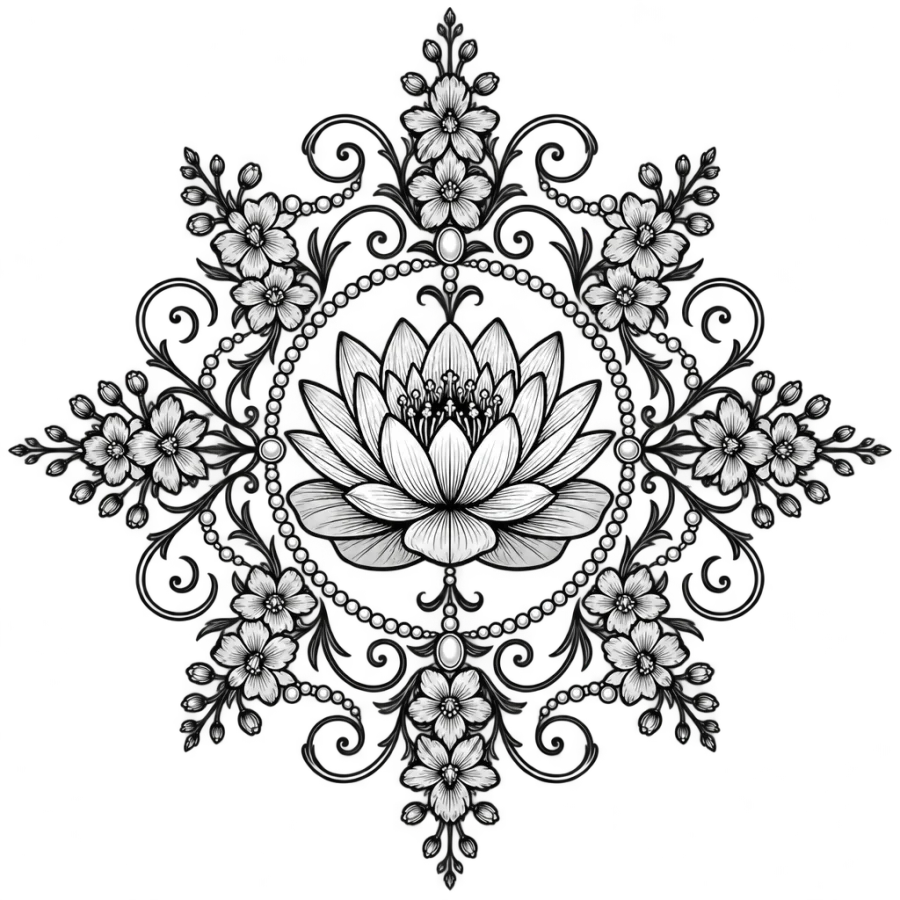
A water lily inside a lace ring of larkspur florets
Use this prompt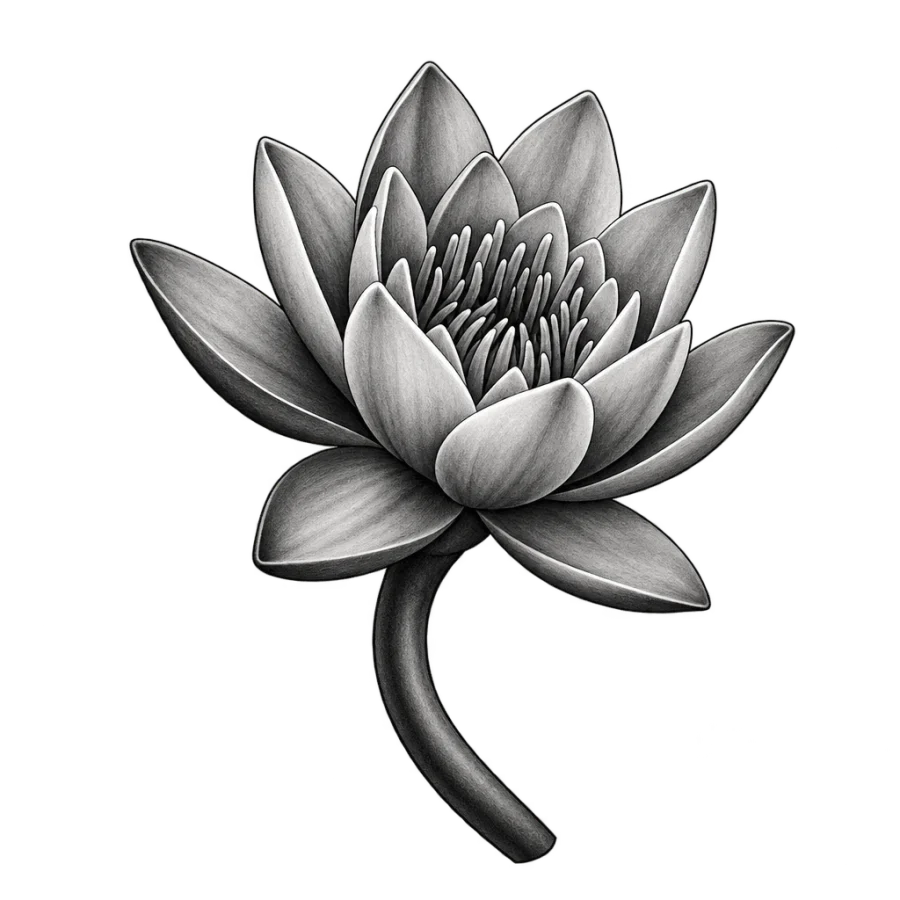
A half open water lily on a curving stem, black and grey
Use this prompt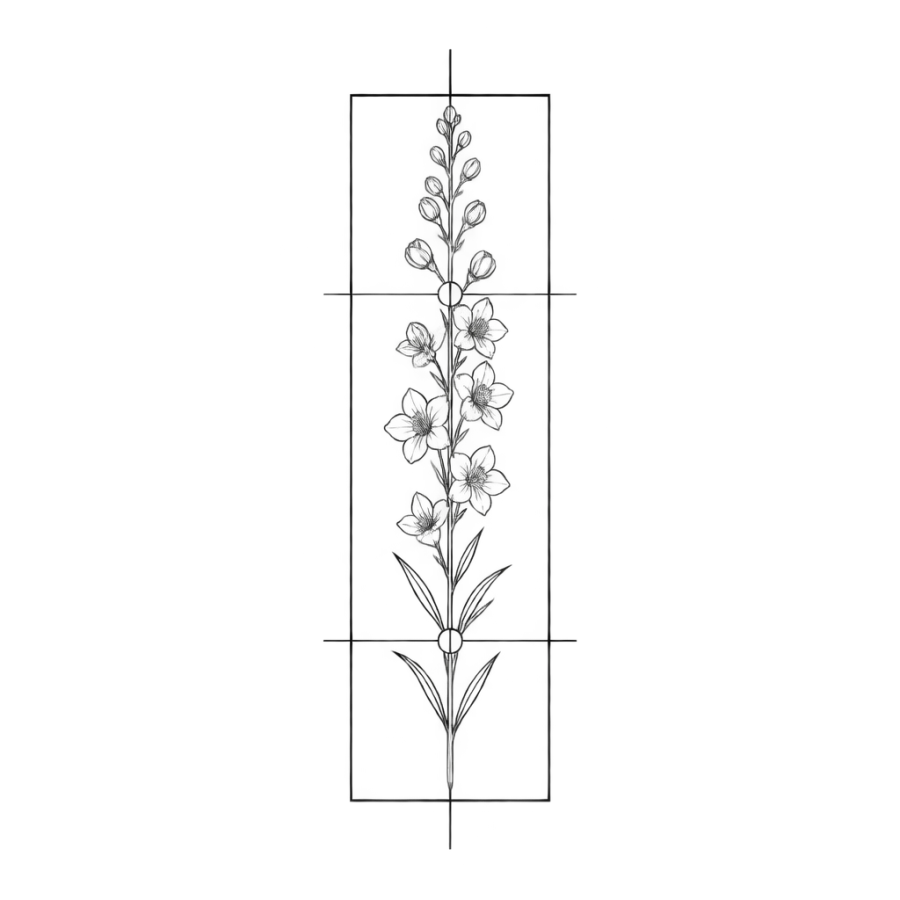
A larkspur stem inside a tall geometric rectangle with thin rules
Use this prompt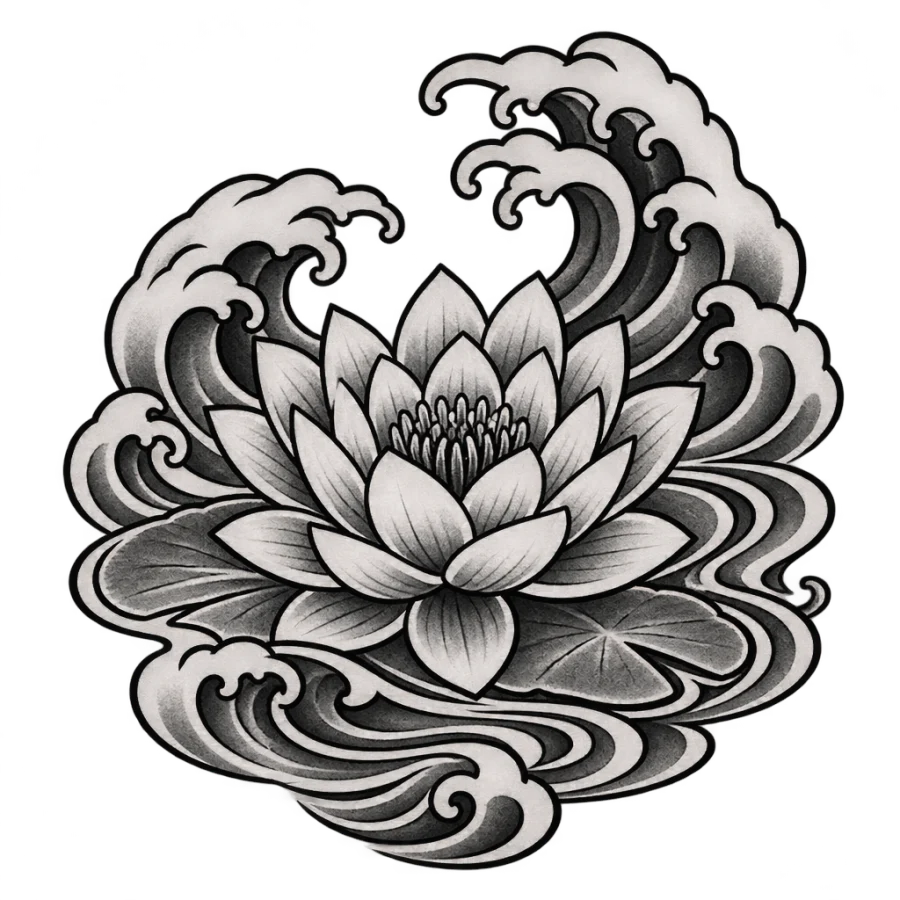
A water lily floating among curling waves, Japanese style black ink
Use this prompt
A water lily on its pad drawn in one unbroken line
Use this prompt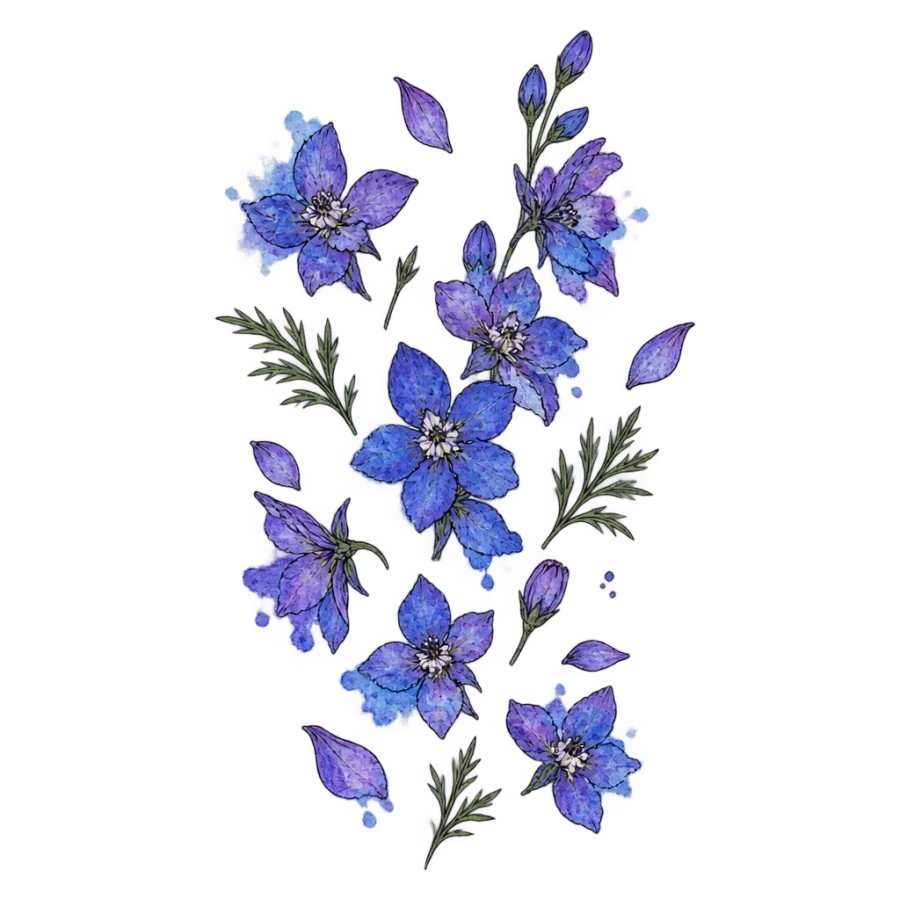
Loose larkspur florets drifting apart in soft blue watercolor
Use this promptDescribe an idea of your own and get four designs back in about 20 seconds.
Open the generator
Questions people ask
What is the difference between larkspur and delphinium?
Larkspur usually means the annual species in the genus Consolida, and delphinium means the perennial ones. They look similar, both carry the spur that gives larkspur its name, and birth flower lists use the words interchangeably. For a tattoo the shape is the same either way.
How big does a larkspur tattoo need to be?
Each flower on the spike wants about 6 to 8 mm across so the spur stays separate from the face. A spike with eight to twelve flowers lands at 12 to 18 cm, which suits a forearm or a calf. A spine piece usually runs 18 to 25 cm with larger individual flowers.
Why do water lily tattoos look muddy after a few years?
Because the flower is built from overlapping petal ranks, and each overlap needs visible skin between the lines. Drawn under about 8 cm those gaps are too thin and close up as the ink spreads. Going larger, or cutting the petal count to twelve or fourteen edges, keeps the layers readable.
Is the water lily the same as a lotus?
No, though they are often confused. A water lily floats on the surface with a notched round pad, and its petals are pointed and numerous. A lotus holds its flower and its round unnotched leaf above the water on a stiff stem. July's flower is the water lily, genus Nymphaea.
What does larkspur mean as a tattoo?
The Victorian readings are open heartedness and lightness, with the color adding a second layer: pink for fickleness, white for a happy nature, purple for first love. It is also planted on graves in parts of the United States. Most people choose it because they or their child were born in July.