Sleeve tattoos for men: planning, cost and healing
A full sleeve is 20 to 40 hours of tattooing across many sittings, and the planning you do before the first session decides whether it reads as one piece.
- Pain level3 to 8 / 10 by zone
- Total time20 to 40 hours
- Sittings6 to 12, 3 to 6 weeks apart
- Studio cost$3,000 to $8,000
A male arm from the shoulder cap to the wrist is 55 to 70 cm long with a circumference from 32 to 42 cm at the bicep down to 17 to 20 cm at the wrist. Covering that surface properly takes 20 to 40 hours for most artists, split into sittings of 3 to 6 hours spaced 3 to 6 weeks apart. In United States studios that is usually $3,000 to $8,000.
The difference between a sleeve and a collection of tattoos on one arm is a single plan drawn for the whole arm before anything is tattooed. That plan has to account for a curved surface, muscle movement, hair and where your shirt sleeve ends. It is also why most artists want a consultation and a deposit before they draw anything.
Planning one composition for a whole arm
A sleeve is seen from every angle as you move, so it has no front. An artist plans it as a wrap, usually with a main subject on the outer arm, supporting elements flowing round the back and a background that ties the whole surface together. Japanese sleeves use wind bars and waves for that background. Blackwork sleeves use solid areas and negative space.
Where the sleeve stops matters as much as what is in it. A three quarter sleeve ending mid forearm covers under a long sleeve shirt, a full sleeve to the wrist does not fully hide under a rolled cuff, and a half sleeve ending at the elbow disappears under any T shirt with a long sleeve over it. Decide the stopping point before session one, because extending later never looks as clean as planning for it.
What each sleeve length involves
- Half sleeve, shoulder to elbow: 10 to 15 hours, $1,200 to $3,000
- Three quarter, shoulder to mid forearm: 15 to 25 hours
- Full sleeve, shoulder to wrist: 20 to 40 hours, $3,000 to $8,000
- Lower sleeve, elbow to wrist: 8 to 15 hours, $1,000 to $2,500
Arm size, muscle and hair across the whole surface
A sleeve covers zones that behave differently. The bicep belly distorts under flex, the outer deltoid barely moves, the elbow ditch creases hard and the forearm stays relatively flat. A good artist places tight geometry on the stable areas and flowing subjects where the skin moves. Tell them if you train seriously, because the arm you have at session one may be a size larger by session ten.
Hair covers the whole arm and gets shaved at every appointment, which over a year of sittings means the arm spends a lot of time freshly shaved. This is harmless. What matters is line weight: fine detail across a hairy forearm loses definition under regrowth, so most artists keep sleeve linework heavier than a standalone piece and rely on contrast rather than delicacy.
Healing between sittings while you train
Each sitting starts a new heal, so a sleeve is a year of repeated recovery periods. The pattern that works for most men: 48 hours off training completely, legs and cardio from day three, upper body from day 10 to 14 once that section has stopped peeling, and no pools, saunas, hot tubs or open water for 3 to 4 weeks after each session.
That rhythm is easier if you and your artist work down the arm in order. Pain also varies enormously across a sleeve: the outer upper arm is around 3 out of 10, the inner bicep 6, the elbow ditch 7 and the wrist and inner elbow 7 to 8. Book the worst zones for shorter sittings.
A sensible sitting rhythm
- Sittings of 3 to 6 hours, 3 to 6 weeks apart
- Outline the whole arm first, then fill and shade in passes
- 48 hours fully off training after each session
- Upper body back at day 10 to 14, water at week 3 to 4
What a shirt covers and what it costs to keep sharp
A long sleeve shirt covers a full sleeve completely while it is buttoned at the cuff. Roll it up and everything from the elbow down shows. A half sleeve that stops above the elbow stays hidden under a short sleeve shirt, which is the version men in strict workplaces usually choose.
Sun is what ages a sleeve. The outer arm takes more UV than almost anywhere else, and an unprotected sleeve loses contrast within 8 to 12 years. Daily SPF 30 or higher on exposed sections keeps it sharp, and most men budget for a touch up pass at some point in the second decade.
12 sleeve tattoo designs for men, with the prompt behind each one
Every design below came out of AI Tattoo Lab. Tap one to load its prompt into the generator, then change a word and make it yours.

Three geometric mandala panels stacked with banded chevrons, solid black sleeve
Use this prompt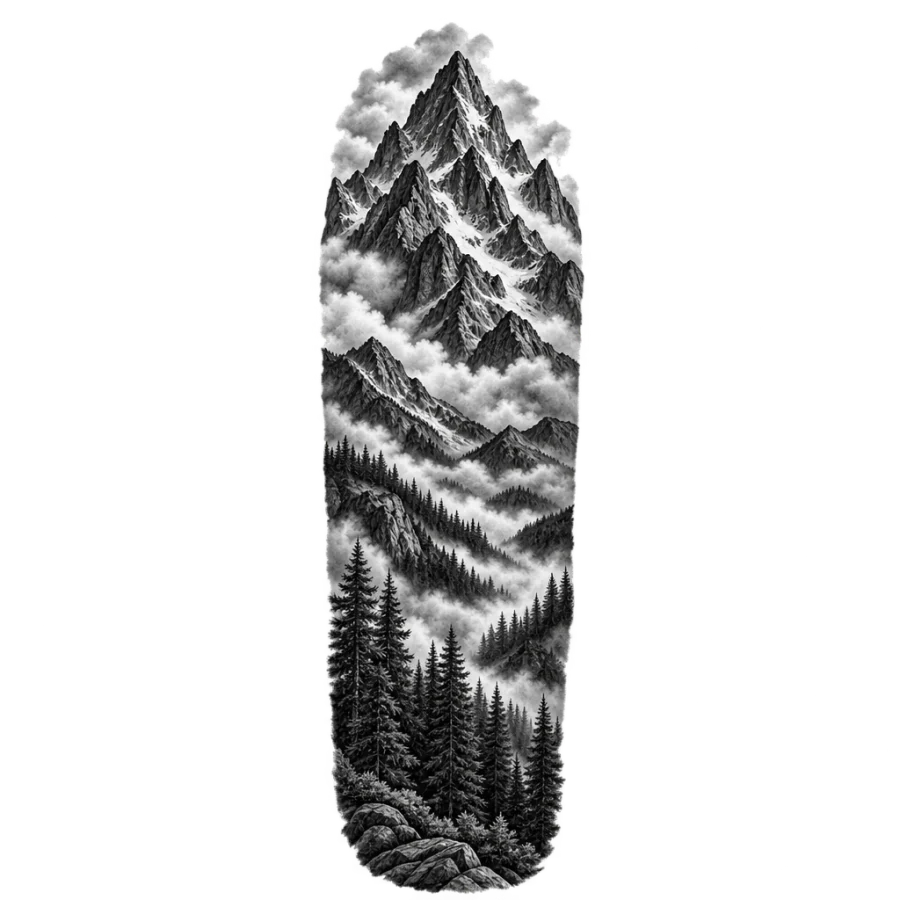
A mountain range over pine forest with clouds, black and grey sleeve
Use this prompt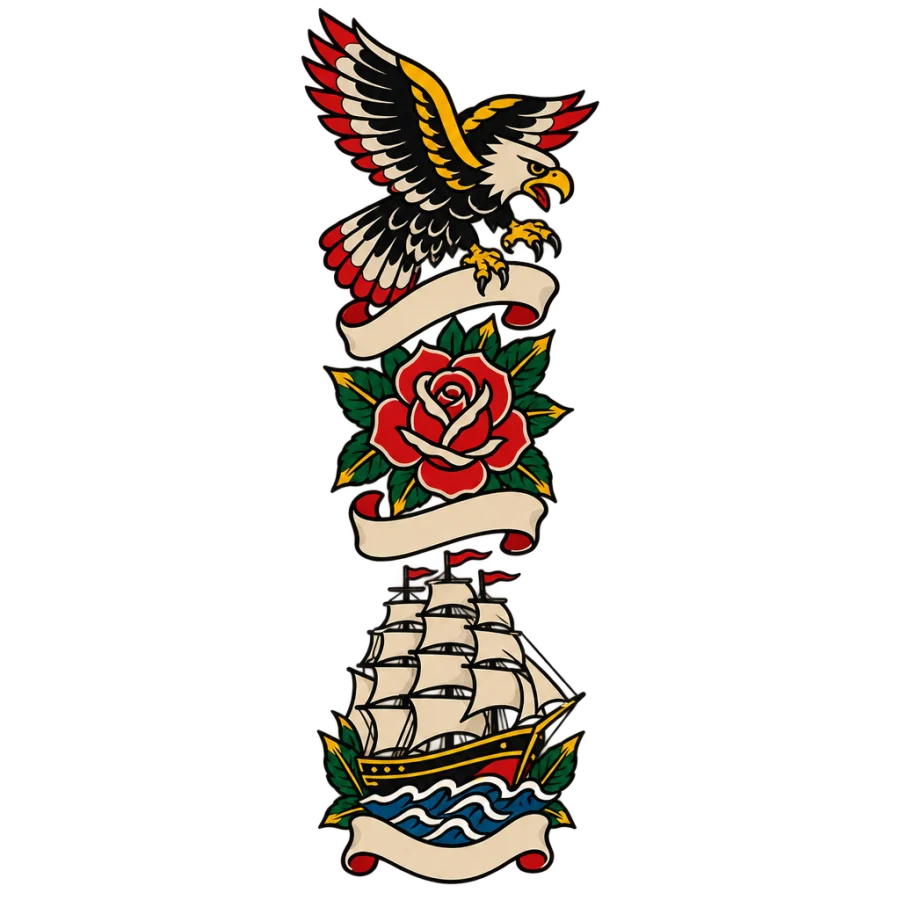
An eagle, a rose and a clipper ship stacked as a traditional sleeve
Use this prompt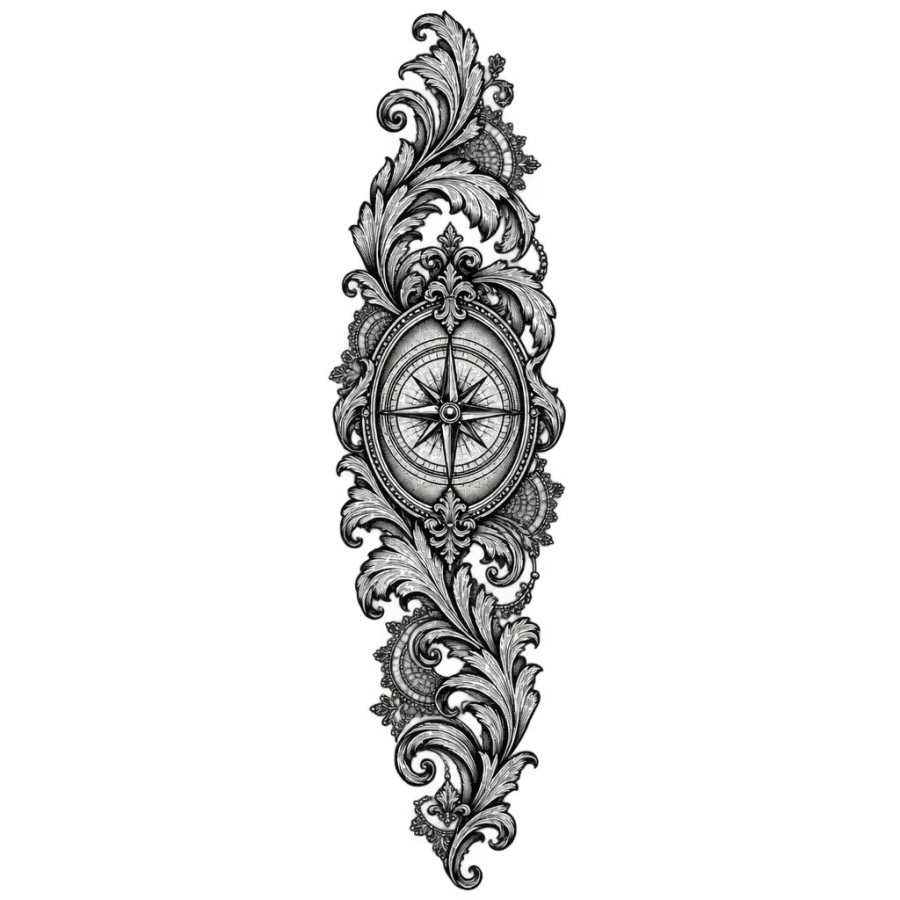
Baroque scrollwork and acanthus leaves framing a compass cameo, sleeve column
Use this prompt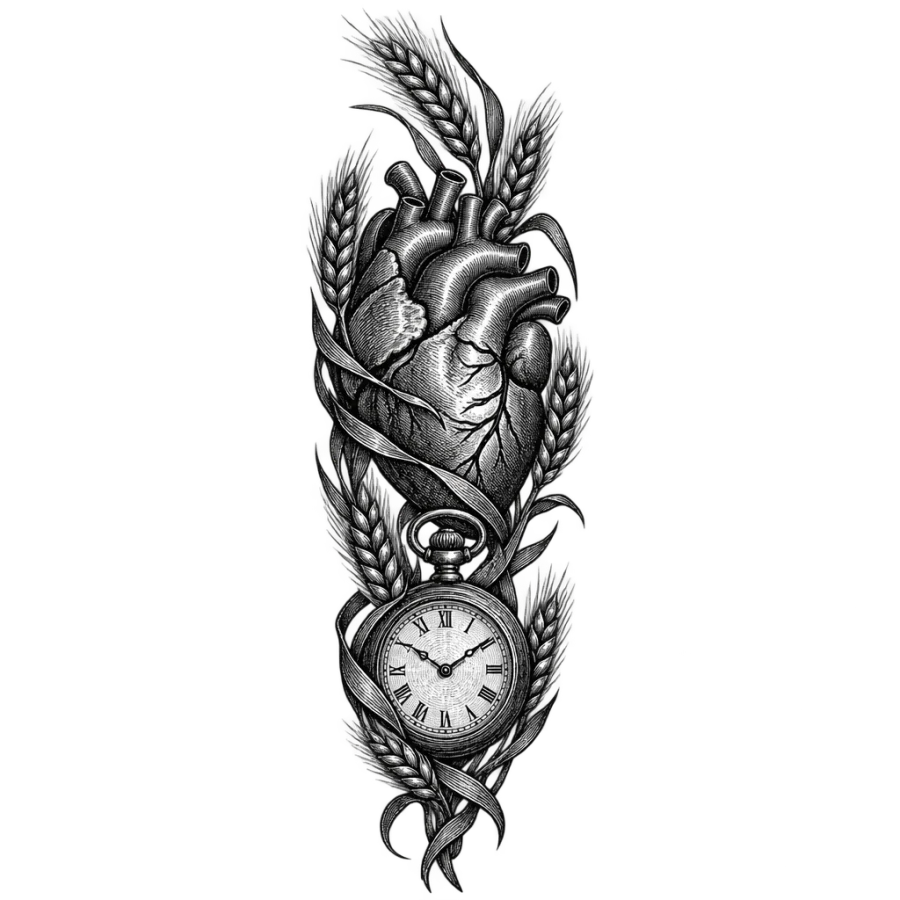
An anatomical heart wrapped in wheat above a pocket watch, engraved sleeve
Use this prompt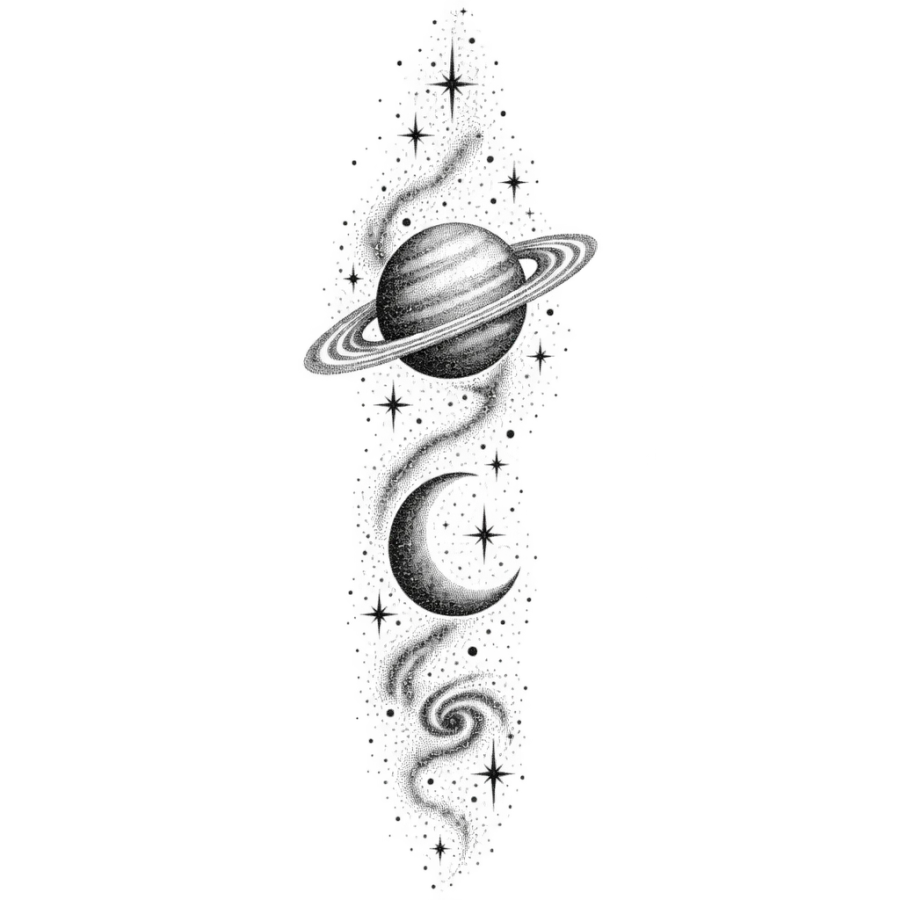
A ringed planet over a crescent moon and star fields, all stippled
Use this prompt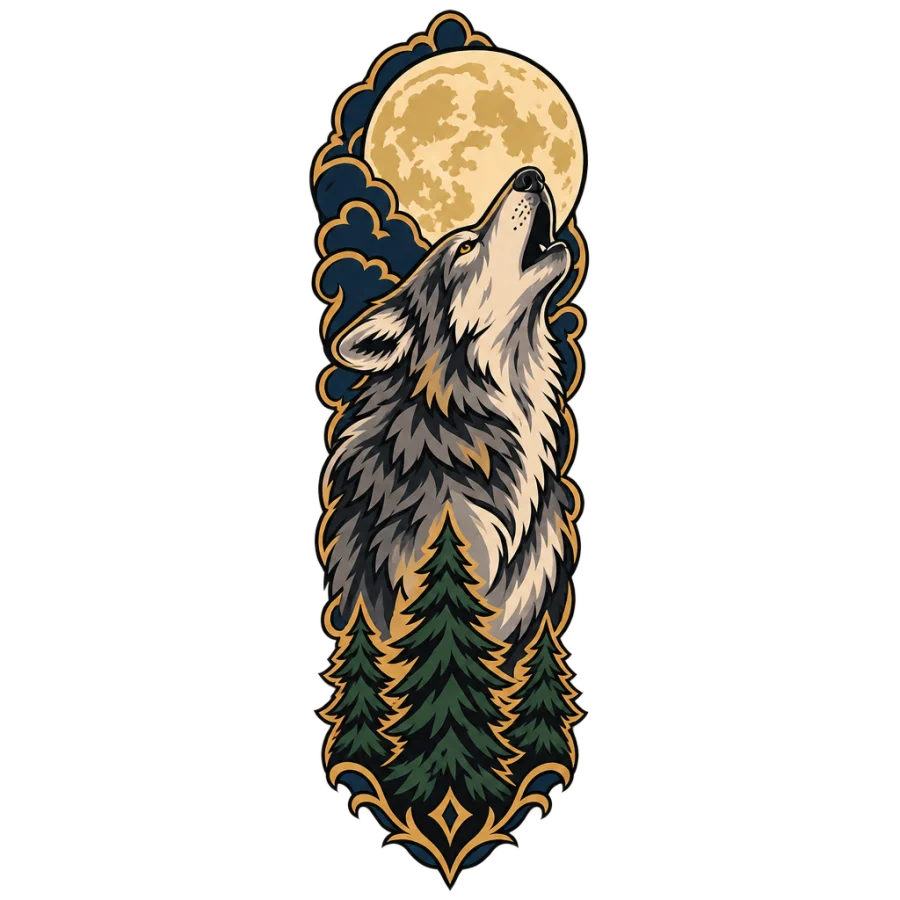
A howling wolf under a full moon with pine tops, neo traditional sleeve
Use this prompt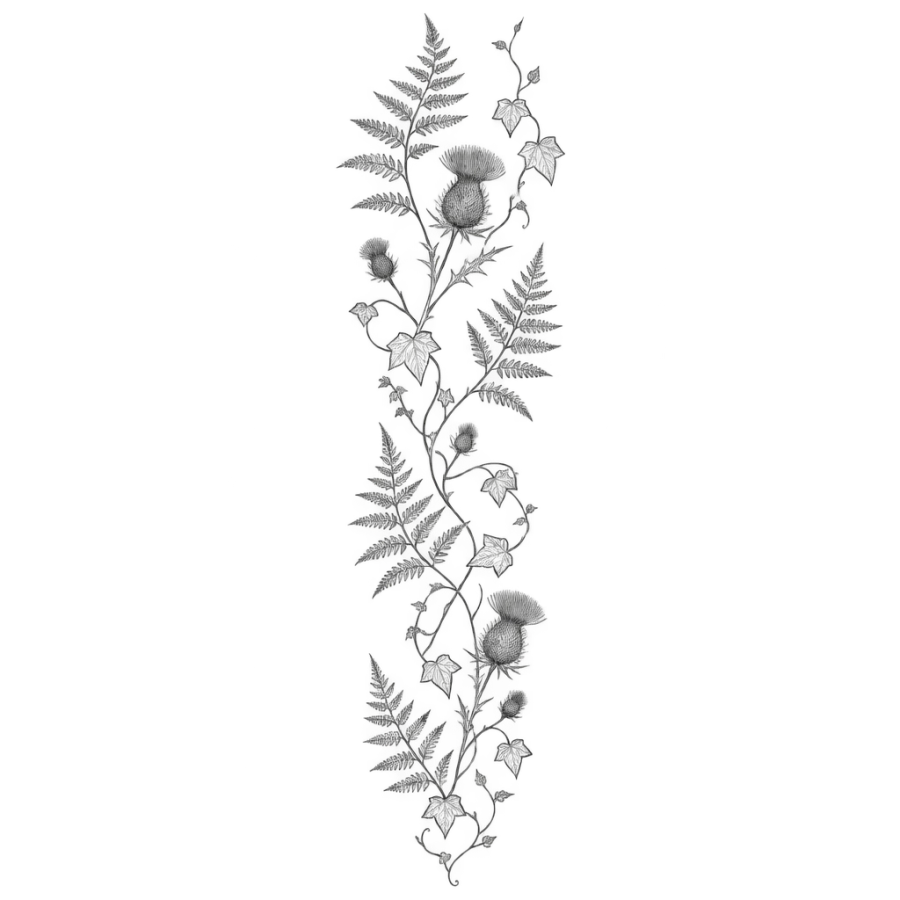
Fern fronds, thistle and ivy running up the arm, airy fine line
Use this prompt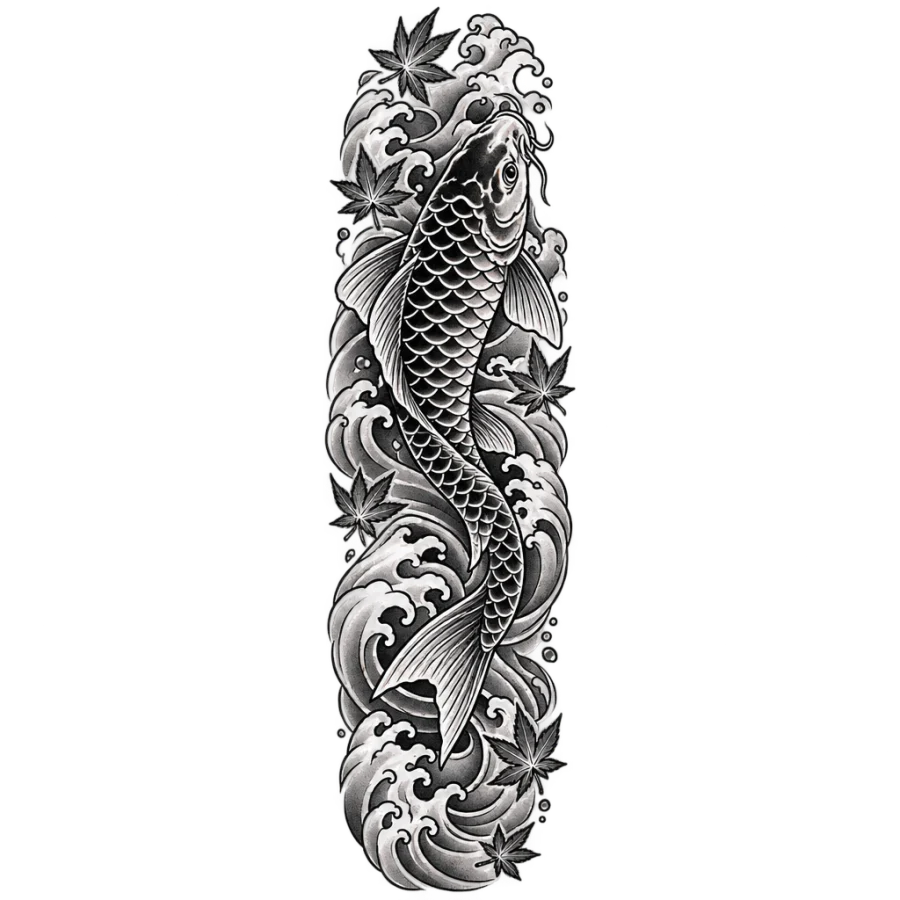
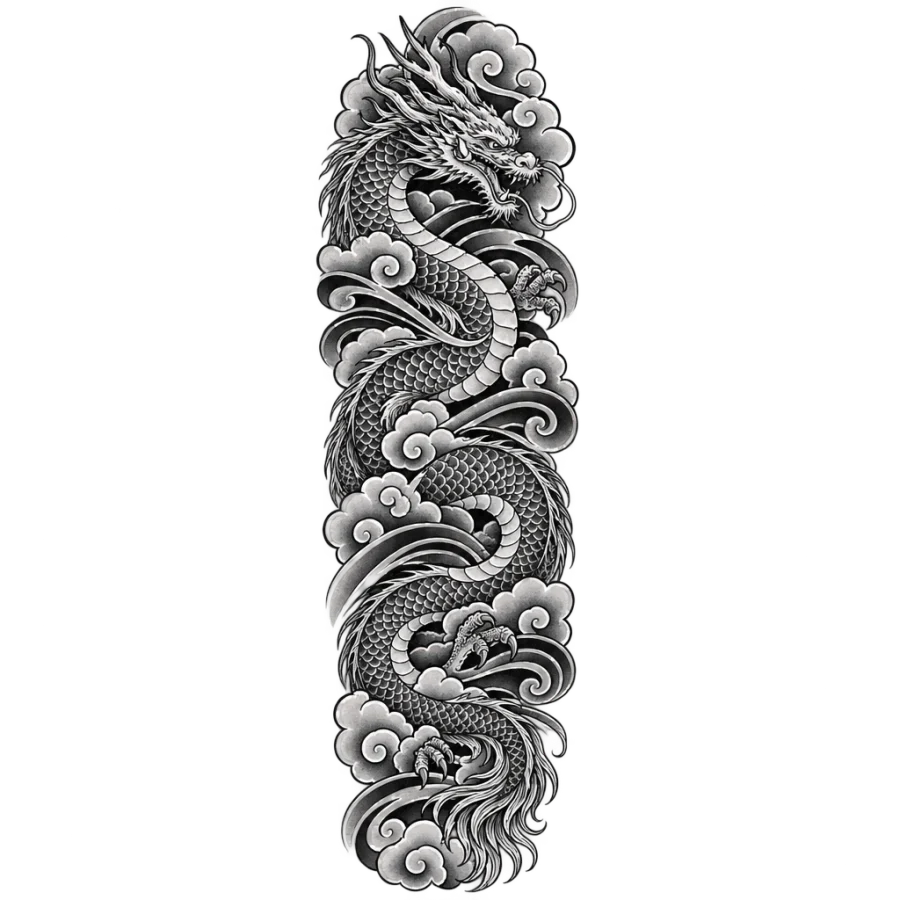
A koi swimming up through churning water and maple leaves, sleeve column
Use this prompt
Solid black arm bands with spearhead and wave shapes left unfilled
Use this prompt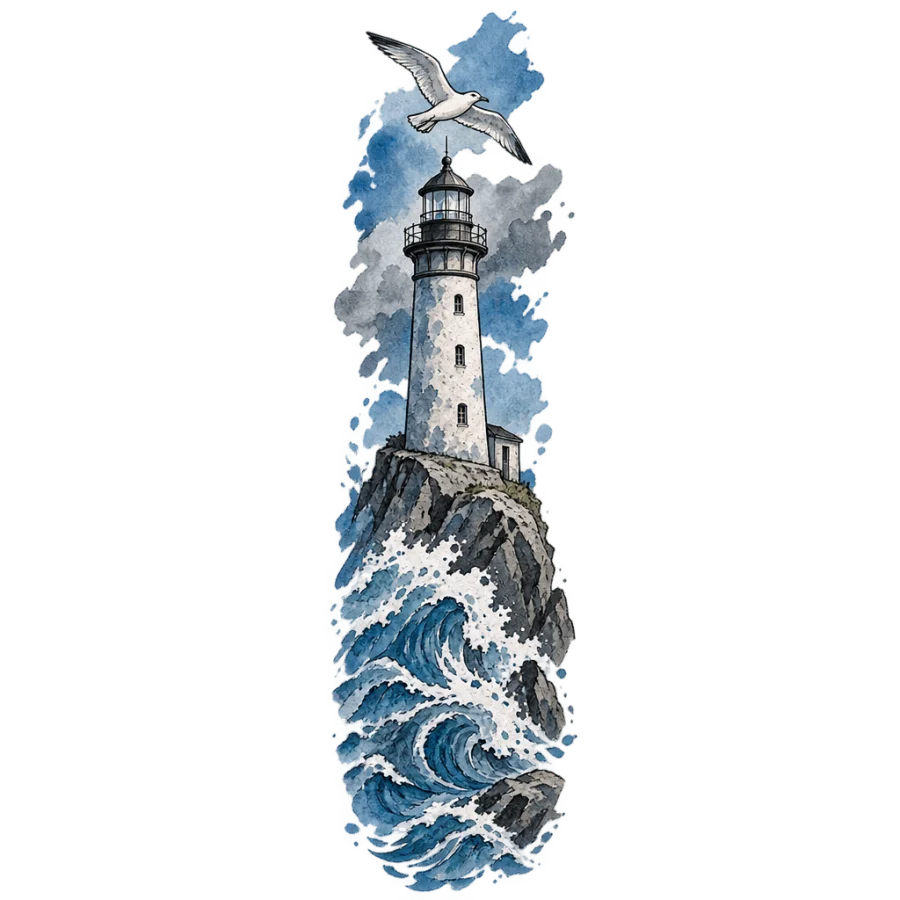
A lighthouse on a rock over a stormy sea, loose watercolor washes
Use this promptDescribe an idea of your own and get four designs back in about 20 seconds.
Open the generator
Questions people ask
How much does a full sleeve cost?
In most United States studios, $3,000 to $8,000 for a full sleeve across 20 to 40 hours. Artists charge $150 to $300 an hour or a day rate of $800 to $1,500. A half sleeve from shoulder to elbow runs $1,200 to $3,000. Expect a deposit of $100 to $500 to hold the first booking.
How long does a sleeve take to finish?
Six to twelve sittings of 3 to 6 hours each, spaced 3 to 6 weeks apart, which usually means 6 to 18 months from the first session to the last. Artists space sittings so each section heals before they work next to it. Rushing that produces patchy results.
Should I get a sleeve if I am still building muscle?
Gradual gains stretch the skin evenly and the design adapts. Very fast changes of 10 kg or more can thin lines and distort tight geometry on the bicep. Tell your artist you train, so they put flowing subjects where the arm moves and reserve precise geometry for the deltoid and forearm.
Can I train while getting a sleeve?
Yes, with a rhythm. Take 48 hours fully off after each sitting, do legs and cardio from day three, and return to upper body work at day 10 to 14 once that section has stopped peeling. Pools, saunas and open water wait 3 to 4 weeks after every session.
Does a sleeve hide under a work shirt?
A buttoned long sleeve covers a full sleeve completely, and rolling the cuff shows everything below the elbow. A half sleeve ending above the elbow stays hidden under a short sleeve shirt, which is the usual choice for men in workplaces that restrict visible tattoos.