June birth flower tattoo ideas and meaning
June gets the rose, which is the most tattooed flower there is, and the honeysuckle, which almost nobody asks for and collapses if you draw it small.
- Wild roses have five broad petals around a ring of yellow stamens.
- Garden roses carry 25 to 60 petals spiralling out from a tight center.
- Rose leaves are compound, usually five or seven toothed leaflets on one stalk.
- The spikes on a rose stem are prickles, outgrowths of the bark, not true thorns.
- Honeysuckle is Lonicera periclymenum, with long tubular two lipped flowers in a whorl.
- Honeysuckle stamens and style project well past the end of the tube.
- The two flowersRose and honeysuckle
- Smallest that works4 cm rose, 6 cm vine
- Usual placementsForearm, upper arm, thigh
- Studio cost$150 to $600
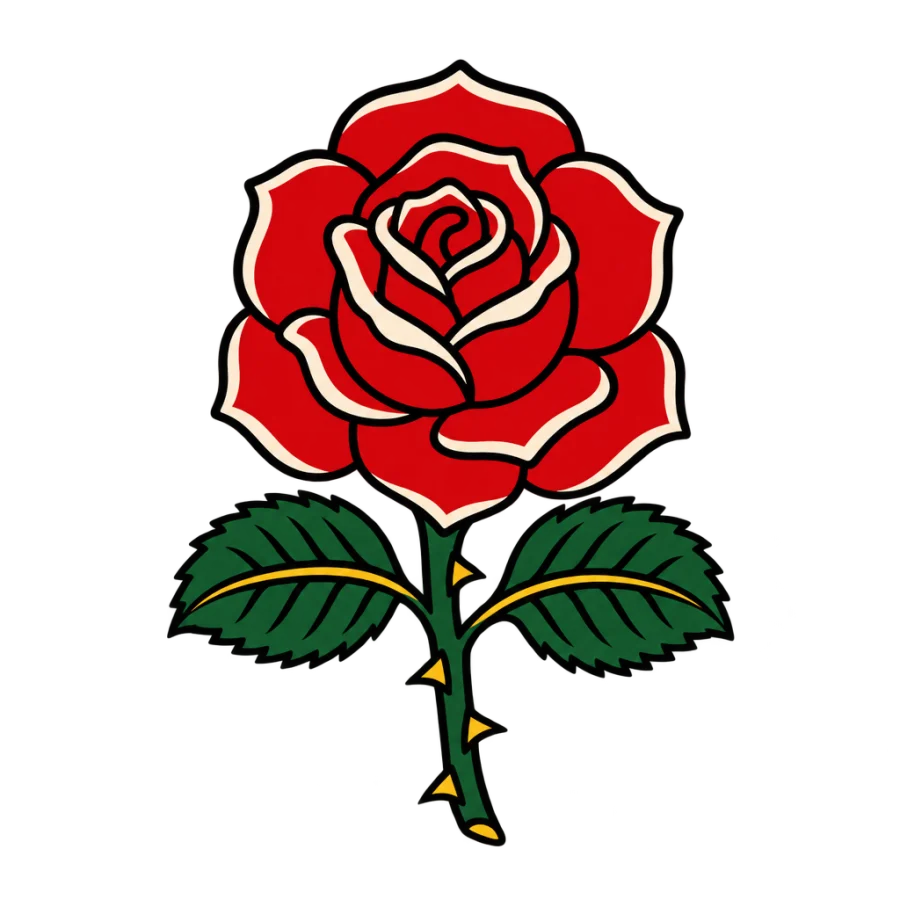
The rose has more tattoo history behind it than any other plant. Sailor Jerry built a whole vocabulary around it: a spiral center, five or six outer petals, a black outline heavy enough to hold everything in place for fifty years. That construction is why a traditional rose at 7 cm still reads on a seventy year old forearm while a realistic rose the same size has gone soft.
Honeysuckle is the second June flower and a much harder subject. It is a whorl of long thin tubes, each splitting into two lips with the stamens shooting out past the end. Every part of it is narrow, which is the opposite of what tattoos want. It can be beautiful at 12 cm and up, and it is not worth attempting below about 6 cm.
Rose and honeysuckle, described properly
A wild rose is simple: five broad petals, slightly notched at the tip, arranged flat around a boss of yellow stamens. A garden rose is that same flower multiplied, with 25 to 60 petals spiralling outward from a tight furled center, the outer ranks reflexing back as the bloom opens. The leaves are compound, five or seven toothed leaflets on a shared stalk, and the stem carries curved prickles.
Honeysuckle builds its flowers into a whorled head at the tip of a twining shoot. Each flower is a long tube, 3 to 5 cm, that splits at the mouth into an upper lip with four shallow lobes and a narrow lower lip curled back on itself. Five stamens and a style project well beyond the tube. The color runs cream to yellow inside, often flushed red or pink on the outside, and the leaves are oval in opposite pairs.
How a rose ages, and what fails
A rose built the traditional way has the best survival record of any floral tattoo. The structure is a series of enclosed shapes with an outline around each, so when the lines spread the shapes stay separate. Four centimeters is a workable minimum for a bud, 6 to 8 cm for an open bloom. Keep the petal count down to eight or ten drawn edges rather than the real forty.
What fails is realism at small sizes and heavy black in the rose's center. A black and grey realistic rose under 10 cm loses its tonal separation within ten years and turns into a grey smudge with a dark core. A solid black center spreads outward faster than anything else in the design. Ask for the center built from overlapping petal edges with skin showing between them instead.
Styles that suit June
American traditional is the safest bet and the most honest one: bold outline, flat reds or black and grey, a simple leaf pair, 7 to 12 cm. Neo traditional gives more petal detail and a wider palette at 12 to 20 cm. Fine line roses are everywhere and they are the ones most likely to need a touch up by year ten, particularly on the forearm. Honeysuckle suits a long trailing composition, which is why it ends up on ribs, spines and the outside of the calf.
Sizes that hold
- Traditional rose, bold outline, 7 to 12 cm, upper arm or forearm
- Small rosebud with two leaves, 4 to 5 cm, wrist or ankle
- Black and grey realistic rose, 12 cm or more, shoulder or thigh
- Honeysuckle trail with three flower whorls, 15 to 25 cm, ribs or calf
- Rose and honeysuckle twined on one stem, 15 cm, outer forearm
June inside a family set
June is the month that most often unbalances a birth flower group, because a rose drawn at its natural weight dwarfs a violet or a daisy. Two ways around it. Either shrink the rose to a bud, which reads clearly at 3 to 4 cm and sits happily next to smaller months, or accept the rose as the center of the composition and arrange the other flowers around it.
The second approach works well for a parent getting all their children in one piece: the rose anchors the middle of a forearm or a shoulder, and the other months fan out on their own stems. Keep one line weight throughout. If the rose is colored and the others are black and grey, the piece will read as a rose with decoration rather than as a set, so decide on color for the whole group before the first session.
12 June birth flower tattoo designs, with the prompt behind each one
Every design below came out of AI Tattoo Lab. Tap one to load its prompt into the generator, then change a word and make it yours.
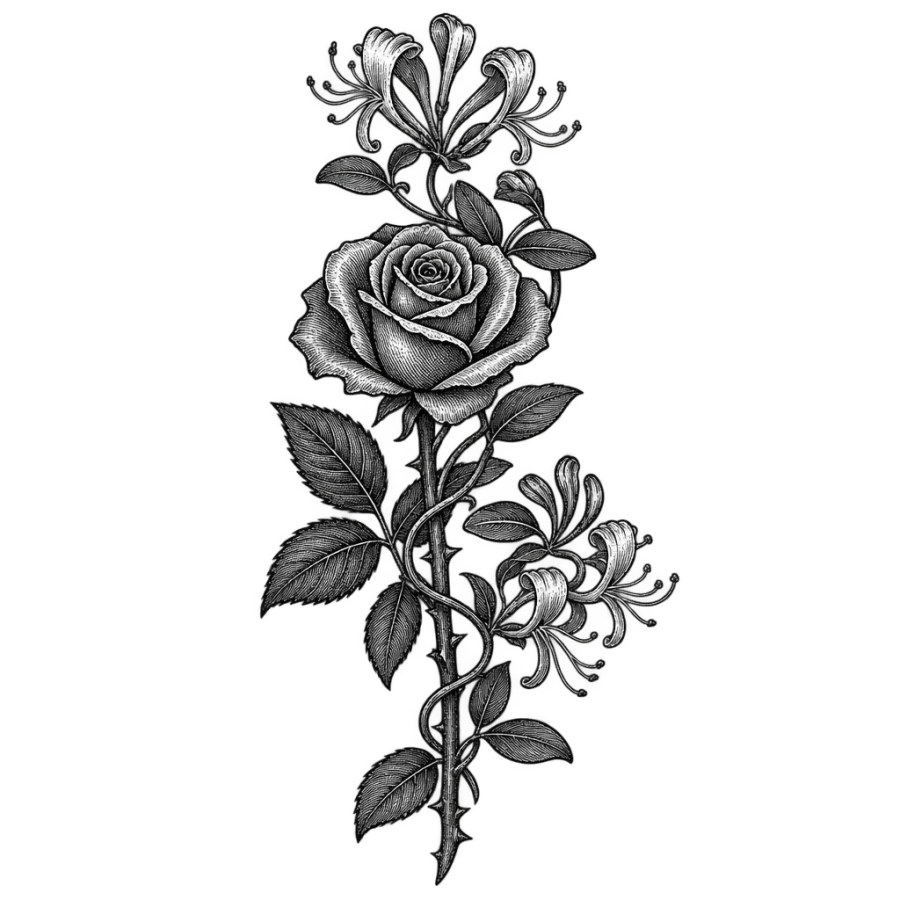
A rose with honeysuckle vine twining around the stem, antique engraving
Use this prompt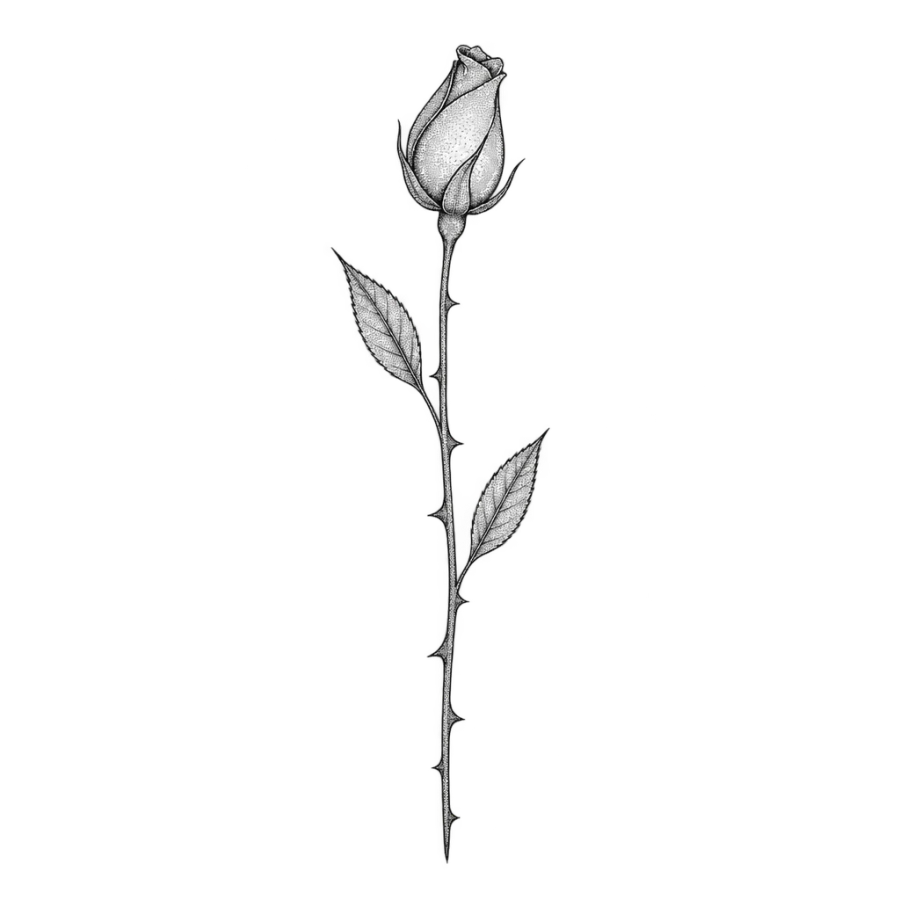
A single rose bud in profile on a long thorned stem, fine line
Use this prompt
A rose head in solid black with petal edges in negative space
Use this prompt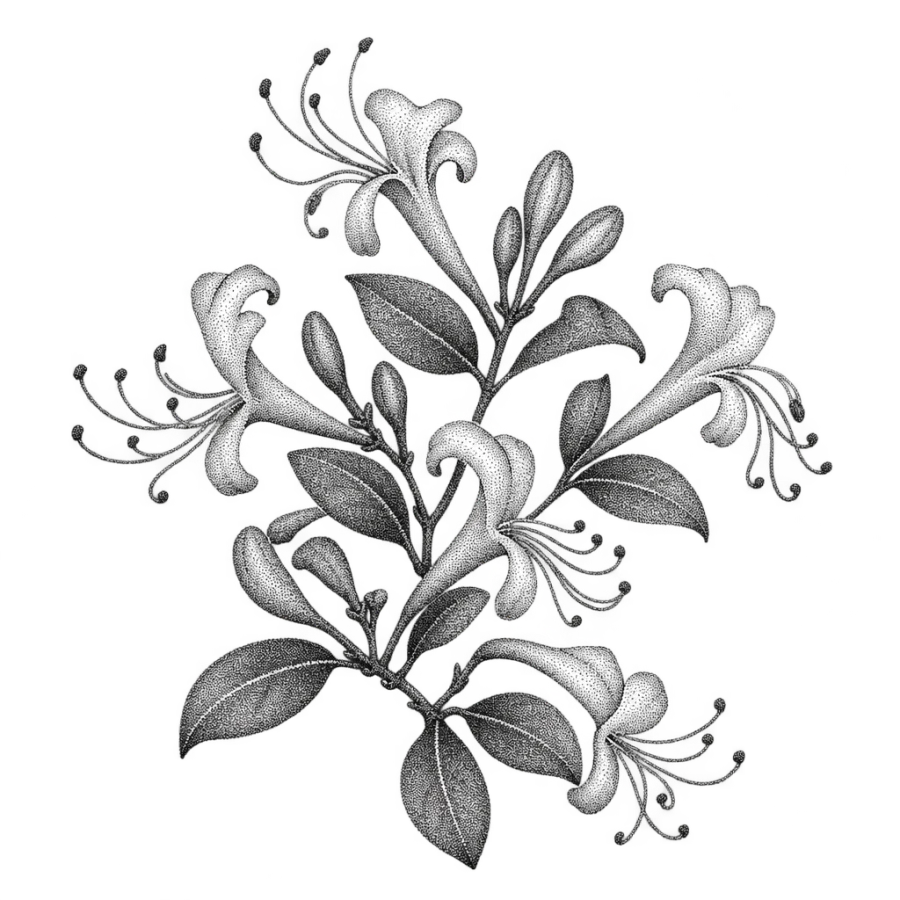
A loose honeysuckle spray with trumpet flowers, stippled dotwork only
Use this prompt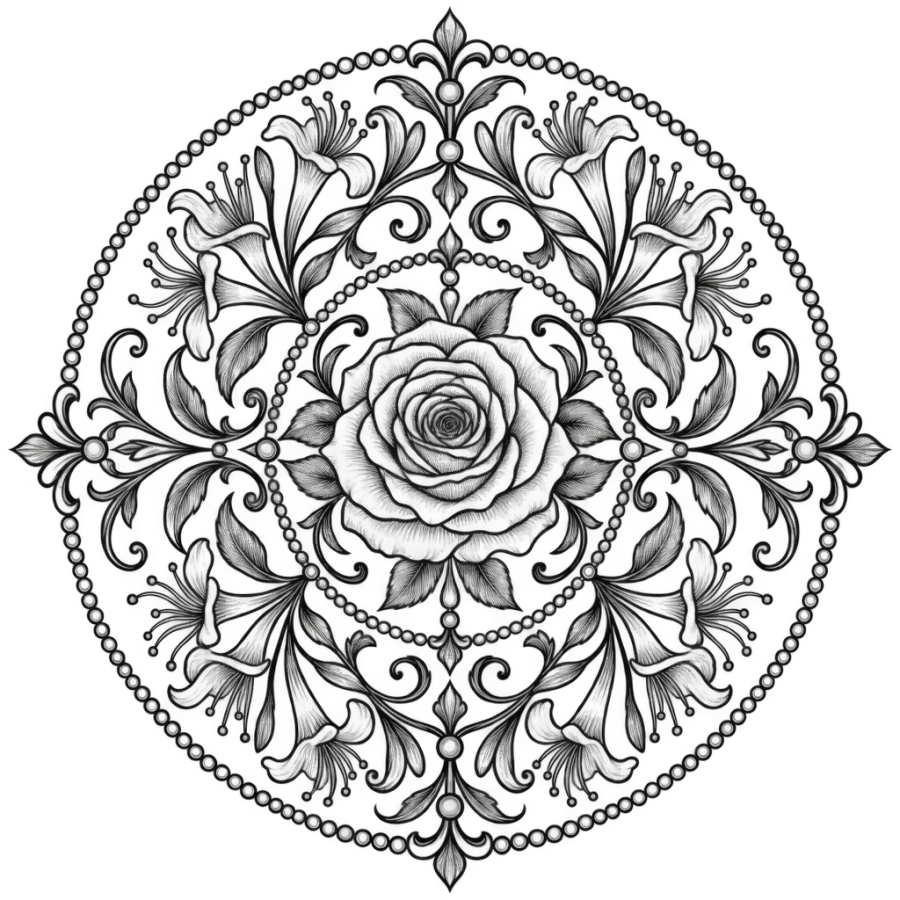
A rose ringed by honeysuckle trumpets and scrolling vine, lace detail
Use this prompt
A rose from above as nested geometric petals inside a diamond
Use this prompt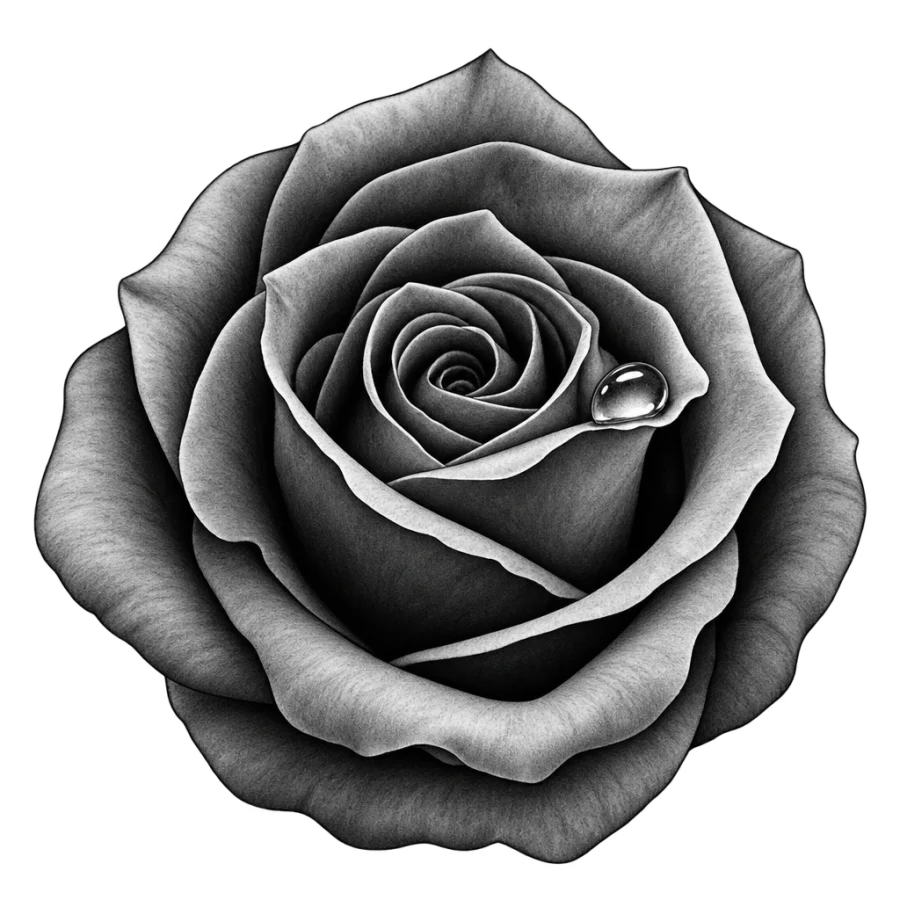
A close crop of rose petals with one dewdrop, black and grey
Use this prompt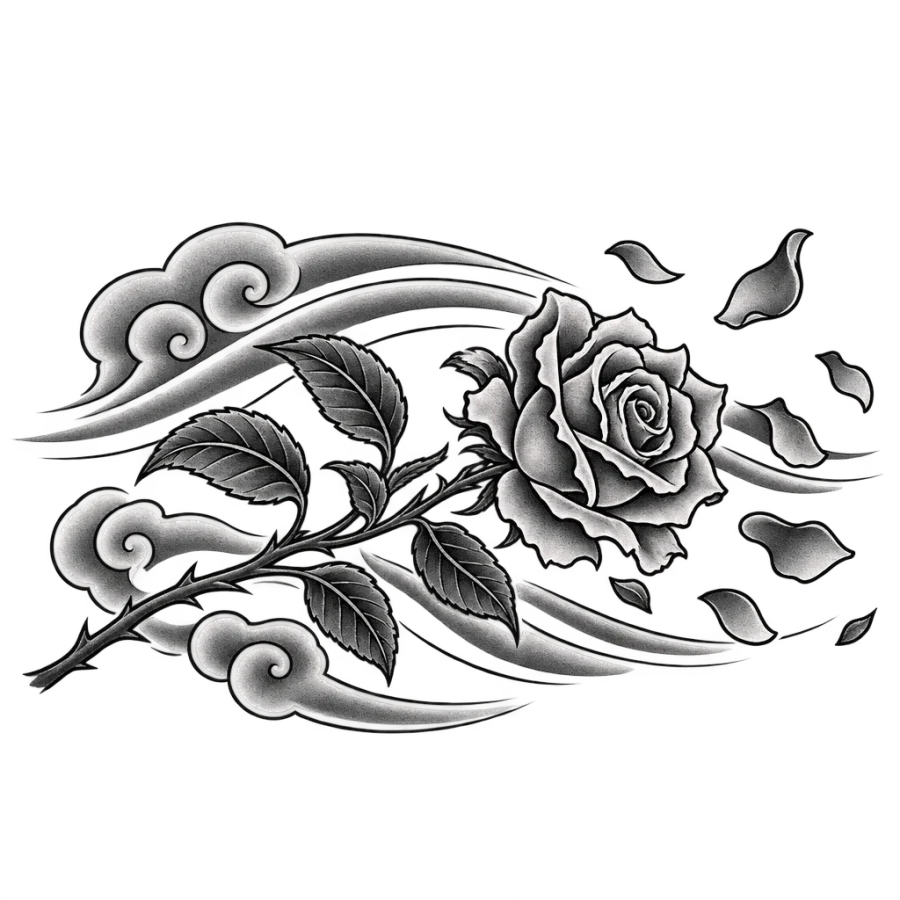
A rose branch swept by wind with petals blowing away, irezumi
Use this prompt
A rose and one leaf drawn without lifting the pen
Use this prompt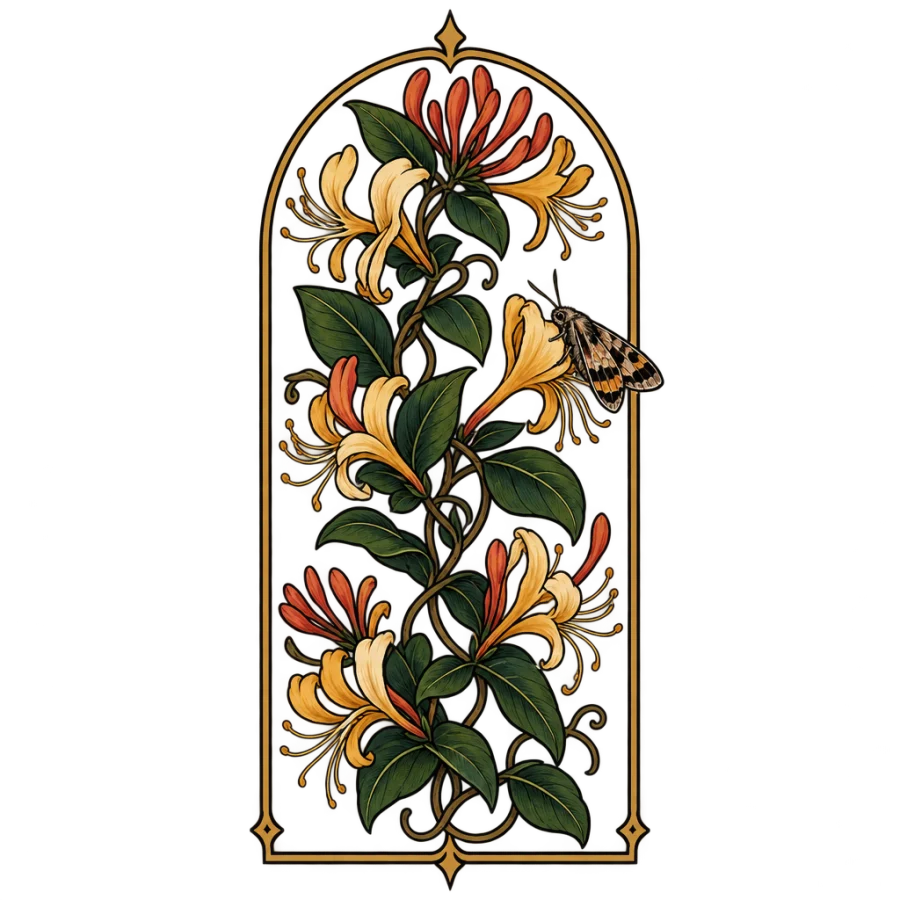
A honeysuckle vine on an arch with a moth resting on it
Use this prompt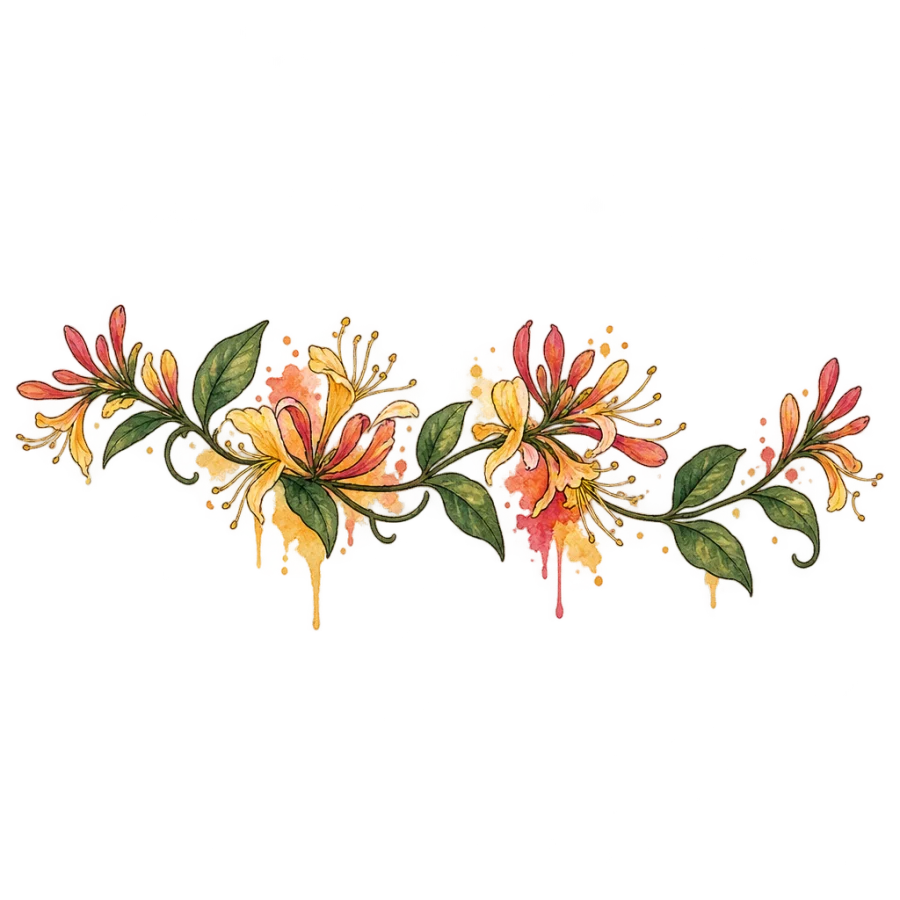
A trailing honeysuckle stem in bloom with loose watercolor washes
Use this promptDescribe an idea of your own and get four designs back in about 20 seconds.
Open the generator
Questions people ask
Why is the rose the June birth flower when roses are everywhere?
Because June is peak rose season in the northern hemisphere, which is where the birth flower lists were written. That does make it a less distinctive tattoo than other months. People who want something clearly tied to June rather than to roses in general often go for the honeysuckle instead.
How small can a rose tattoo be?
A bud works at 3 to 4 cm and an open bloom at 6 to 8 cm, as long as the artist draws eight to ten petal edges rather than a realistic forty. Below that, the center fills in and the piece reads as a dark spiral. Avoid solid black centers at any small size.
Should I get a fine line rose or a traditional one?
It depends how long you want it to look sharp without work. A traditional rose with a bold outline holds its shape for decades. A fine line rose looks lighter and more delicate and typically needs a touch up somewhere between years eight and fifteen, sooner on the hand or the forearm.
What does the honeysuckle mean?
Victorian flower language read it as devoted affection and bonds of love, taken from the way the plant twines tightly around whatever it climbs. That twining habit is also why it shows up in couple and sibling designs, with two stems wrapping a shared support. The meaning is a nineteenth century convention rather than anything ancient.
Can I use a rose for a June birthday and still avoid a generic tattoo?
Draw it as a botanical specimen rather than as flash: a single stem with compound leaves, visible prickles, one open bloom and one bud, done at 12 to 15 cm. Adding the month's honeysuckle twining through it also separates the piece from the thousands of standalone roses.