January birth flower tattoo ideas and meaning
January gives you two very different flowers: a dense ruffled carnation that suits bold linework, and a snowdrop so small it needs a careful hand.
- Carnation is Dianthus caryophyllus. Snowdrop is Galanthus nivalis.
- Wild carnations have five fringed petals. Garden doubles carry 40 or more.
- A snowdrop flower has six tepals: three long outer, three short notched inner.
- The inner snowdrop tepals each carry a green inverted V near the tip.
- Red carnation reads as love, white as remembrance, striped as a polite no.
- Snowdrops open from late December to February across most of Europe.
- The two flowersCarnation and snowdrop
- Smallest that works6 cm ruffle, 4 cm bell
- Usual placementsForearm, ribs, upper arm
- Studio cost$120 to $450
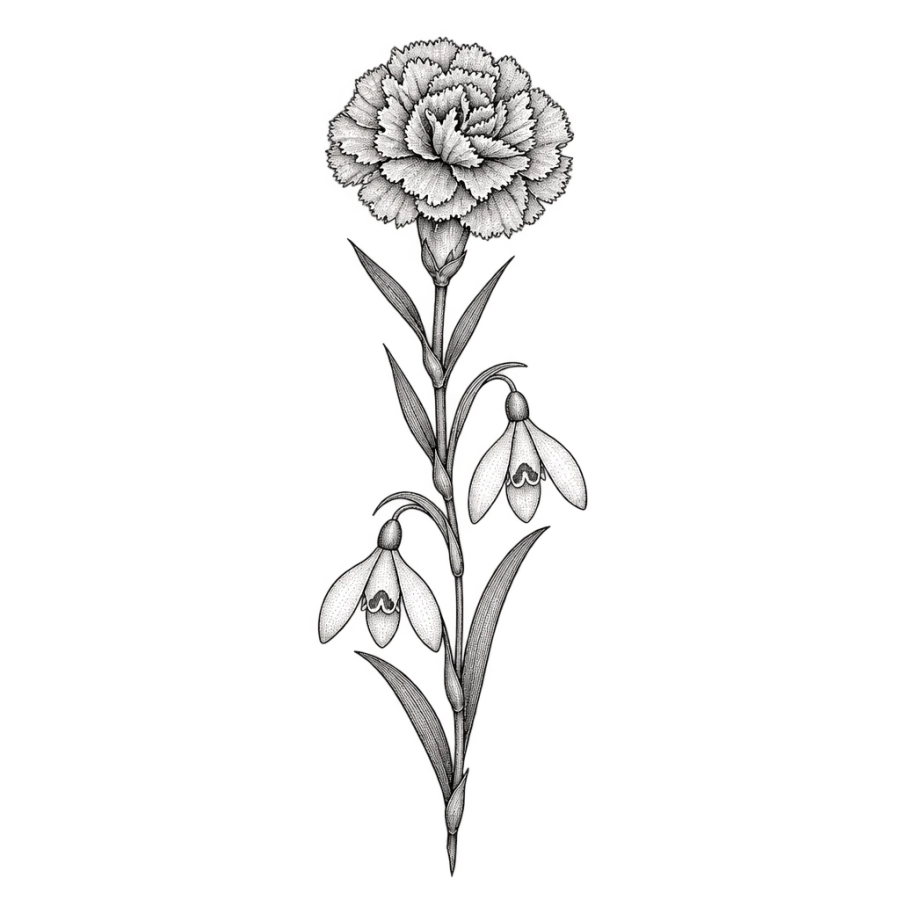
Most people who search for this arrive knowing the month and nothing else. January has two traditional flowers, and they behave in opposite ways on skin. The carnation is a packed ball of fringed petals that wants a heavy outline and room to breathe. The snowdrop is a single nodding bell on a thin stem, quiet enough to sit on a wrist without shouting.
The choice matters more than it sounds, because one of these ages well at 5 cm and the other does not. A carnation drawn small fills in over ten years until the ruffles close into a dark mass. A snowdrop keeps its shape at almost any size, as long as the artist leaves white space inside the bell. Pick for how it will look in 2036.
What a carnation and a snowdrop actually look like
A garden carnation is a cup of 40 or more petals, each one fringed along its outer edge like torn paper, packed so tightly that the center disappears. The whole head sits on a swollen green tube, the calyx, which flares at the top into five sharp points. The stem is grey green, jointed, and swells slightly at each node. Leaves are narrow and grass like, in opposite pairs, and they curve away from the stem.
A snowdrop is the opposite kind of shape. One flower hangs from an arched stalk that emerges from a papery sheath, so the bell always points down. It has six tepals in two ranks: three long white outer ones that spread, and three short inner ones with a notch at the tip and a green inverted V mark above the notch. Two strap shaped grey green leaves come straight from the bulb.
Details artists get wrong on these two
- Drawing a carnation with smooth petal edges. The fringe is the whole point.
- Standing the snowdrop upright. It nods, and the arch in the stalk is the shape people recognize.
- Giving a snowdrop five petals. It has six tepals in two obvious ranks.
- Forgetting the carnation's calyx tube, which is what tells it apart from a peony.
- Adding a green mark to the outer snowdrop tepals rather than the inner three.
How each one holds up at tattoo size
The carnation is a small tattoo trap. Every ruffle is a thin line of skin between two lines of ink, and skin fills in as a tattoo ages. Below about 6 cm across the head, those gaps close within five to ten years and you are left with a dark rosette. Most artists solve it by drawing 12 to 18 petal edges instead of the real 40, and by cutting a few deliberate white channels through the head.
A snowdrop survives much smaller. The bell can go down to 8 mm and still read, because it is three simple shapes and the negative space inside carries the form. A full stem with two leaves works at 6 to 9 cm on a wrist or an ankle. If you want the green V inside the bell, you need the bell at 12 mm or more, otherwise the color has nowhere to sit and spreads into the outline.
Styles that suit each flower
Carnations were a staple of American traditional flash long before birth flower sets became popular, and that is still where they look best. A bold 5RL or 7RL outline, four or five flat color values, and heavy black behind the head gives you something that will still read across a room in thirty years. Neo traditional works too, with more petal detail and a wider palette, at 10 cm and up.
Pairings that work
- Carnation in American traditional, 8 to 12 cm, outer forearm or upper arm
- Carnation in black and grey with whip shading, upper arm or chest
- Snowdrop in fine line with a 3RL, 6 to 9 cm, wrist or inner forearm
- Snowdrop in dotwork, where the stippling suggests the pale bell without heavy outline
- Both together as a small bouquet, 10 to 14 cm, inner bicep
Stacking January with other months
Family sets are the most common version of this request: one flower per child, or one per sibling, grouped into a single piece. The problem is scale. A real carnation head is roughly ten times the mass of a real snowdrop, so drawing them at life proportion makes one month dominate. Ask the artist to normalise the heads to a similar visual weight and to keep one line weight across the whole group.
Layouts that hold up: a stem bundle tied with a small band, a row along a forearm, or a loose arc across a collarbone. Leave room at one end if more children are possible, since adding a stem to a tied bouquet means retouching the tie. Two to four months read cleanly at 12 to 18 cm. Past five flowers you need 20 cm or the thigh.
12 January birth flower tattoo designs, with the prompt behind each one
Every design below came out of AI Tattoo Lab. Tap one to load its prompt into the generator, then change a word and make it yours.
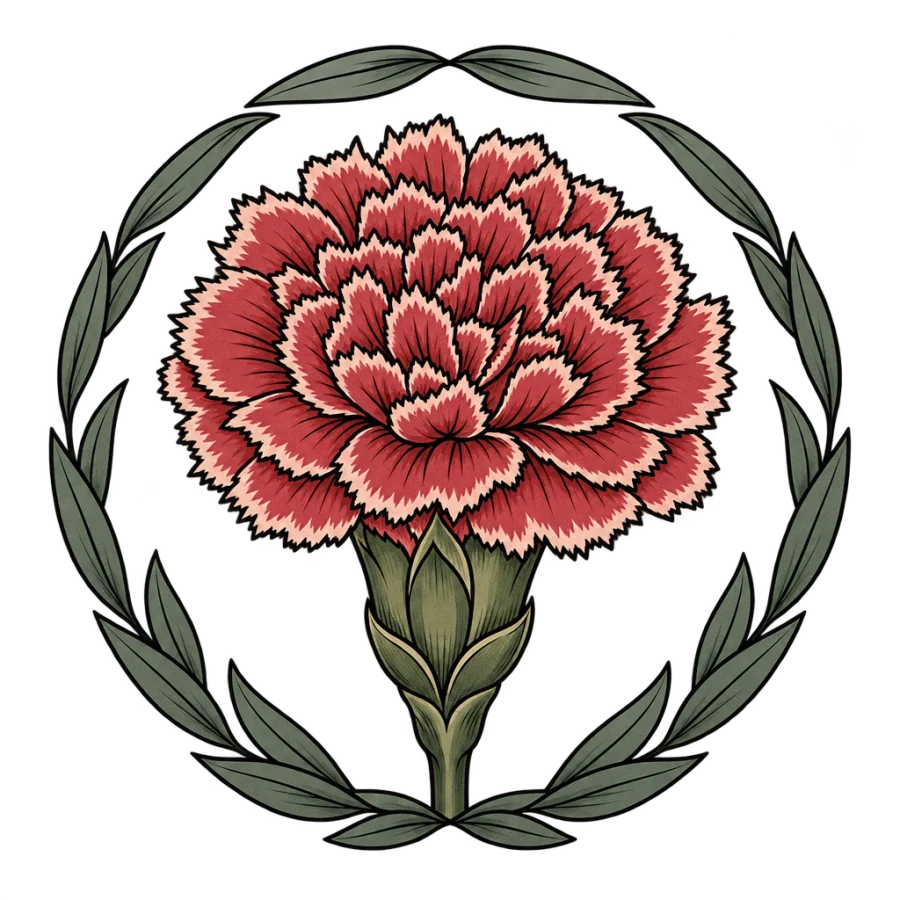
January birth flower tattoo design
Use this prompt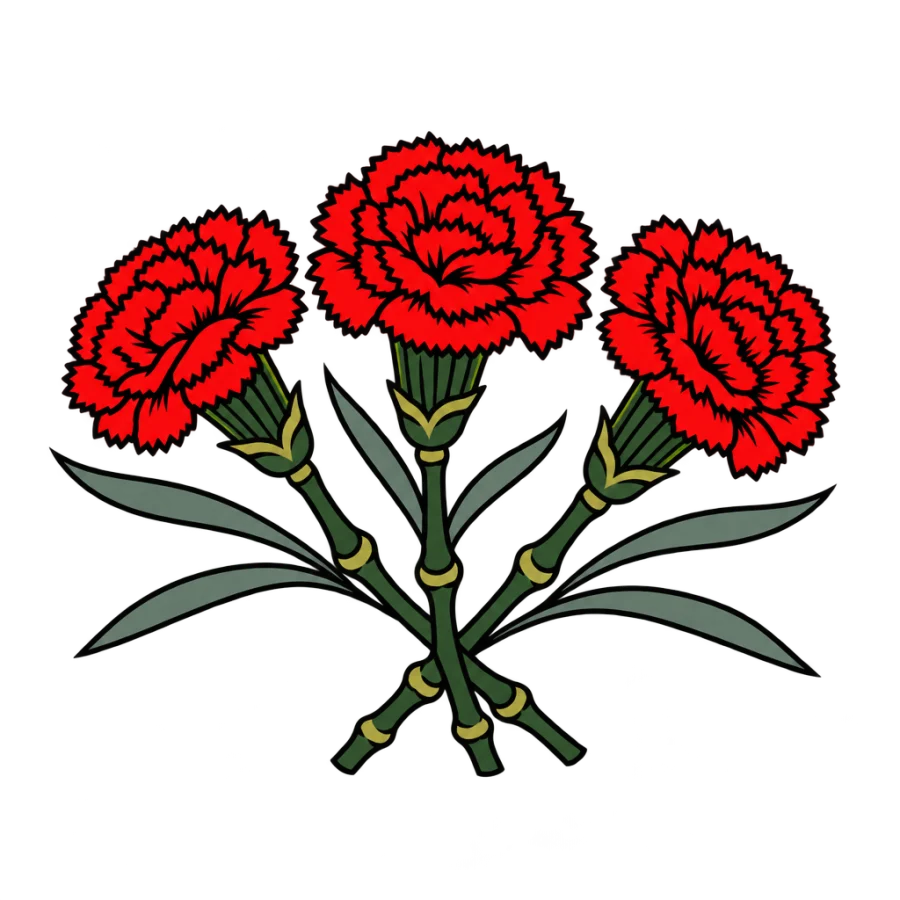
January birth flower tattoo design
Use this prompt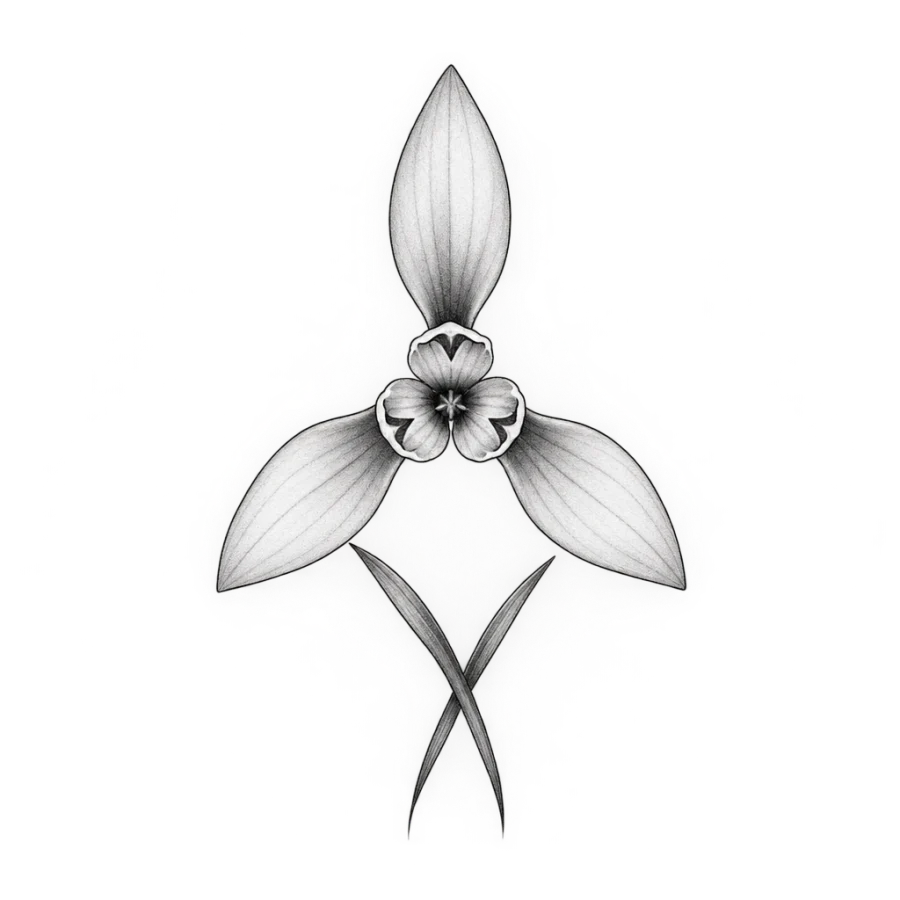
January birth flower tattoo design
Use this prompt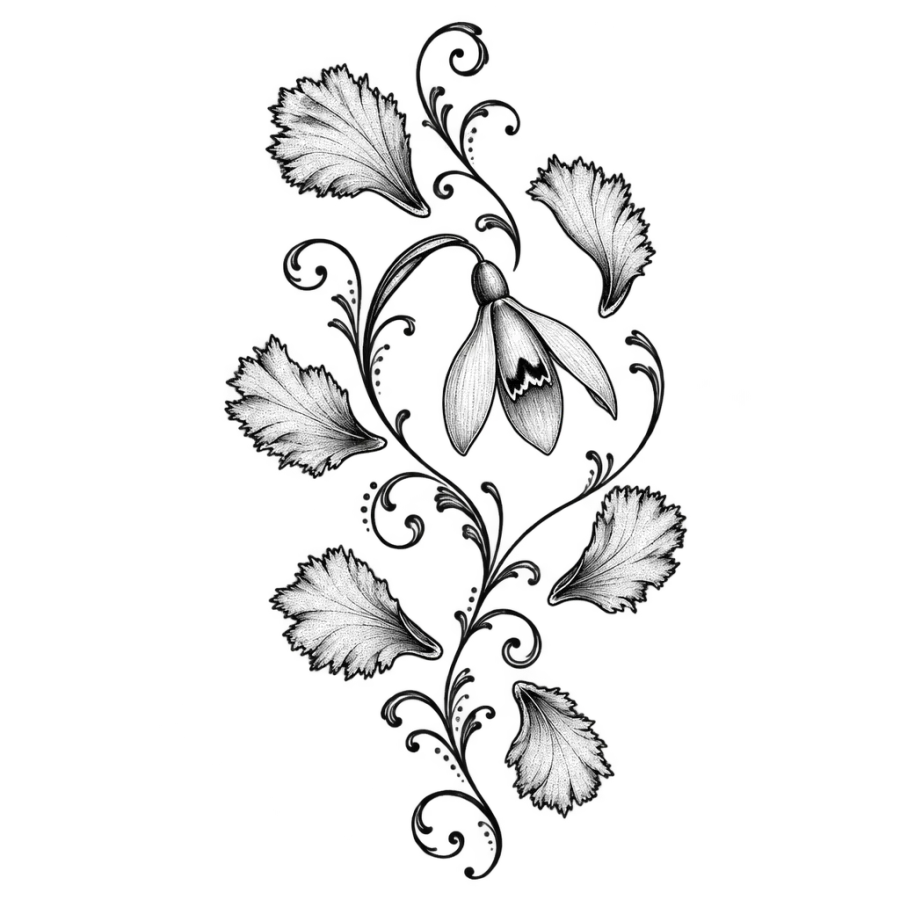
January birth flower tattoo design
Use this prompt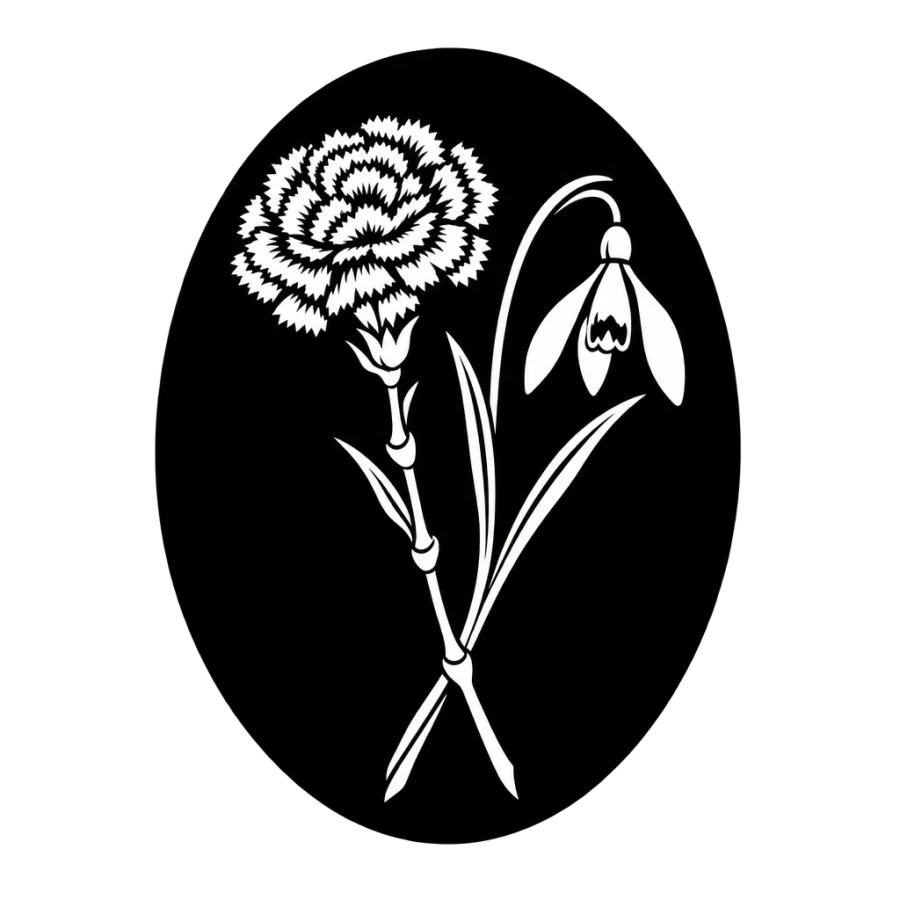
January birth flower tattoo design
Use this prompt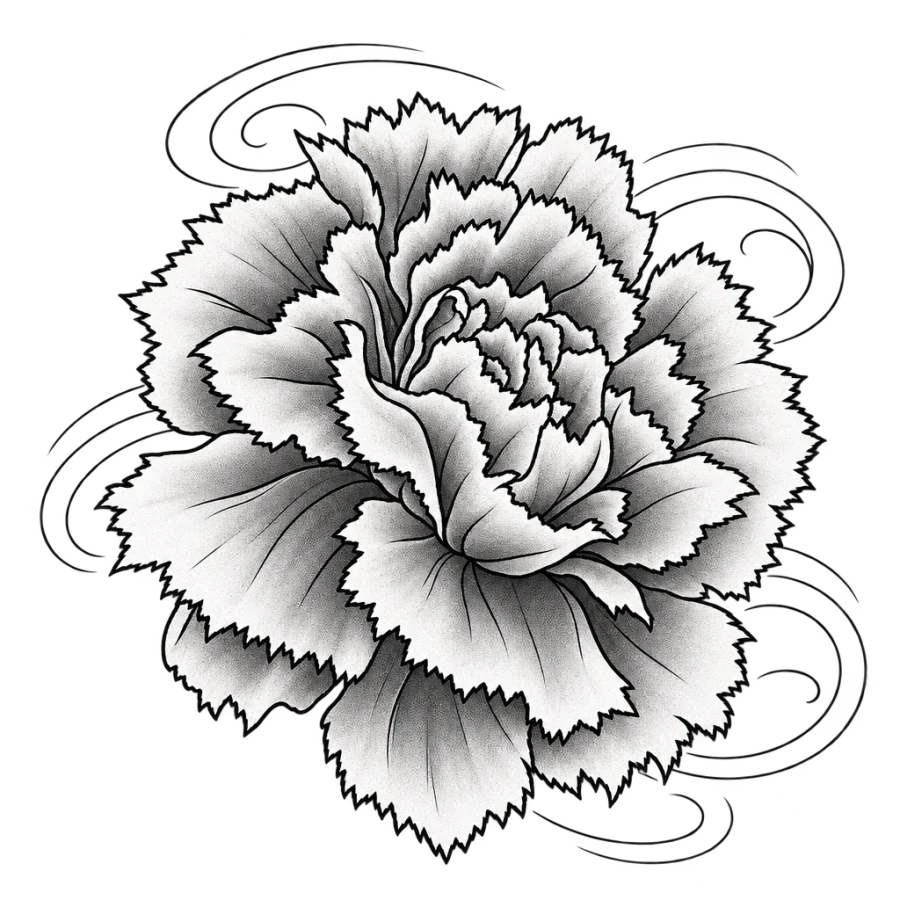
January birth flower tattoo design
Use this prompt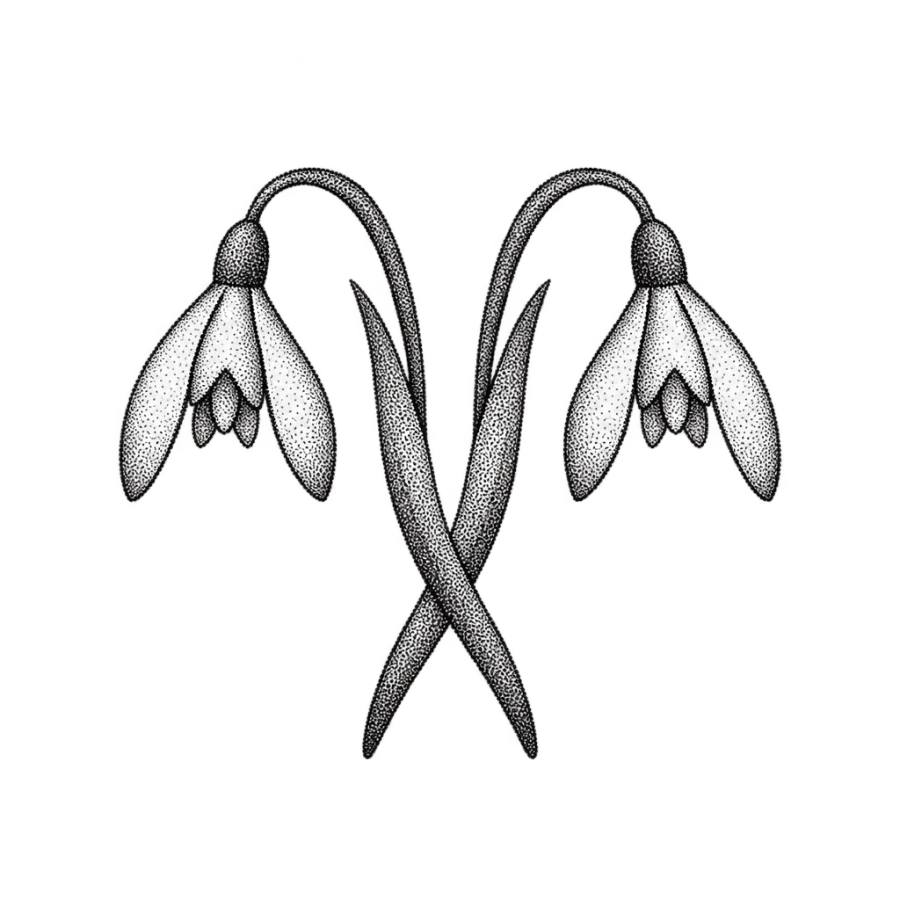
January birth flower tattoo design
Use this prompt
January birth flower tattoo design
Use this prompt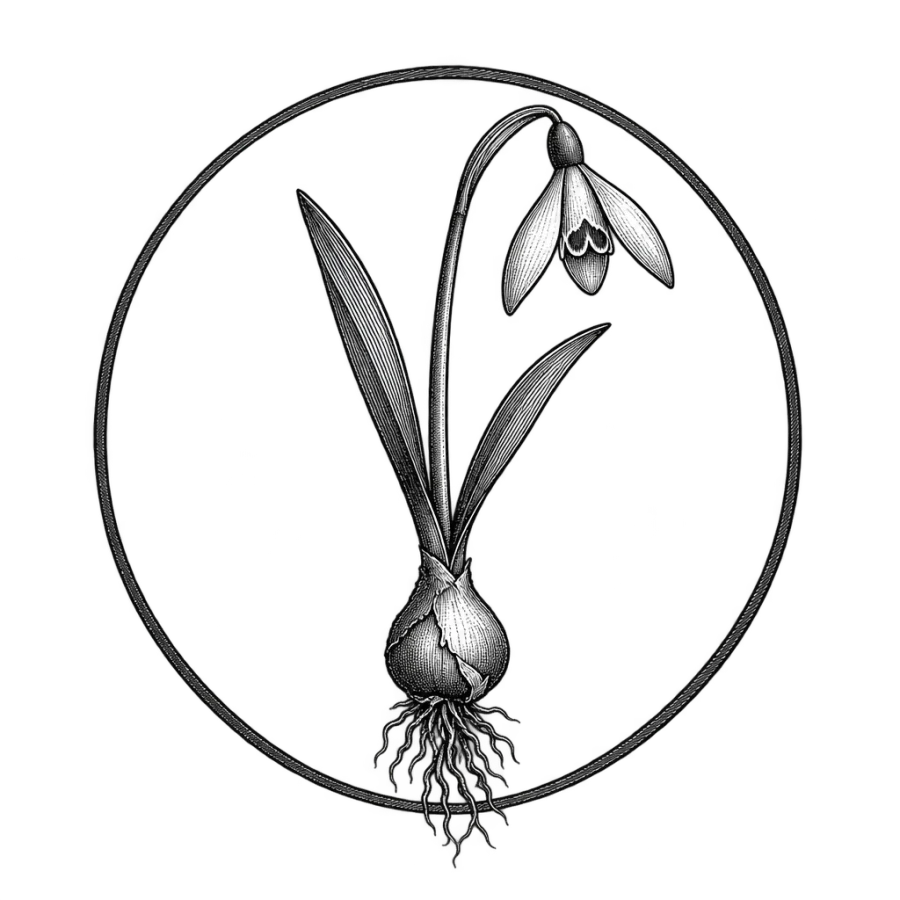
January birth flower tattoo design
Use this prompt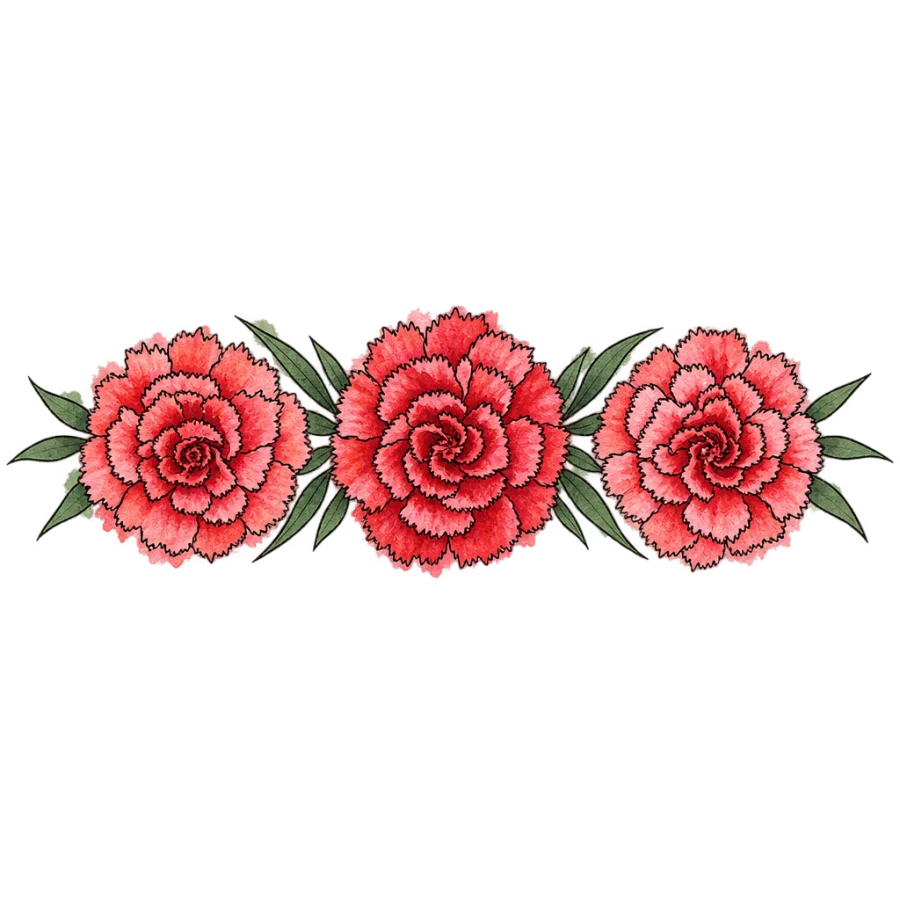
January birth flower tattoo design
Use this prompt
January birth flower tattoo design
Use this promptDescribe an idea of your own and get four designs back in about 20 seconds.
Open the generator
Questions people ask
Which January flower should I pick, carnation or snowdrop?
Pick the carnation if you want something bold that reads from a distance and suits traditional or neo traditional work. Pick the snowdrop if you want something small and quiet on a wrist, ankle or behind the ear. Both are correct for January, so this is a design decision rather than a symbolic one.
How small can a carnation tattoo be before it blurs?
About 6 cm across the flower head is the safe floor, and that is only if the artist simplifies the petal count. Anything under 4 cm will close up into a dark shape within five to ten years as the lines spread. A snowdrop handles small sizes much better if you want something tiny.
Does a carnation tattoo mean something specific by color?
The color meanings come from Victorian flower dictionaries rather than anything older. Red reads as love, dark red as deep affection, white as remembrance, pink as a mother's love, and yellow as disappointment. Striped carnations meant refusal. None of it is fixed, so tell your artist what you want it to say.
Can I combine January with other family birth months?
Yes, and it is the most common request on these designs. Keep one line weight across all the flowers, normalise the head sizes so no single month dominates, and plan the layout for the number of people you might add later. A row or a loose arc is easier to extend than a tied bouquet.
Where does a snowdrop tattoo sit best on the body?
The long arched stem suits narrow vertical spaces: the inner forearm, the side of the ankle, behind the ear, or along the spine. A single stem at 6 to 9 cm fits a wrist without wrapping. Avoid the fingers and the outer edge of the hand, where fine botanical lines break up fastest.